WHAT BIRDS CAN TEACH US
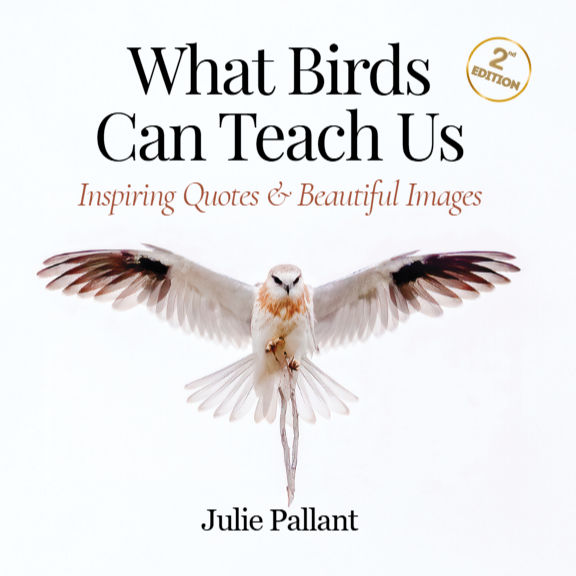
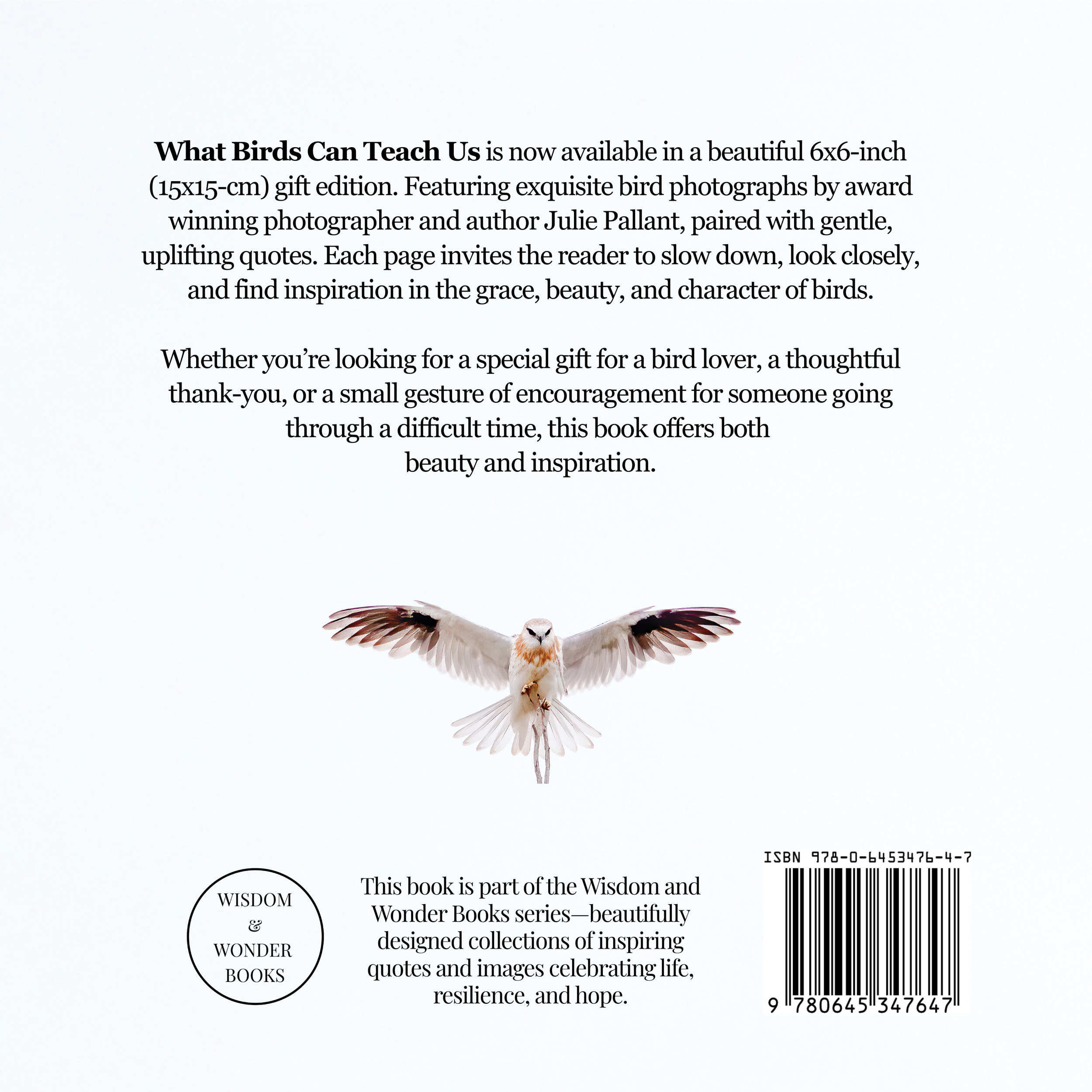
Whether you’re looking for a special gift for a bird lover, a thoughtful thank-you, or a small gesture of encouragement for someone going through a difficult time, this book offers both beauty and inspiration..
If you would like a sneak peak inside the book, click on the button here to open a flipbook showing the first 12 pages.
All of the photographs in this book were captured by Julie Pallant, an award winning photographer based in Ballina, a beautiful seaside town in northern New South Wales, Australia.
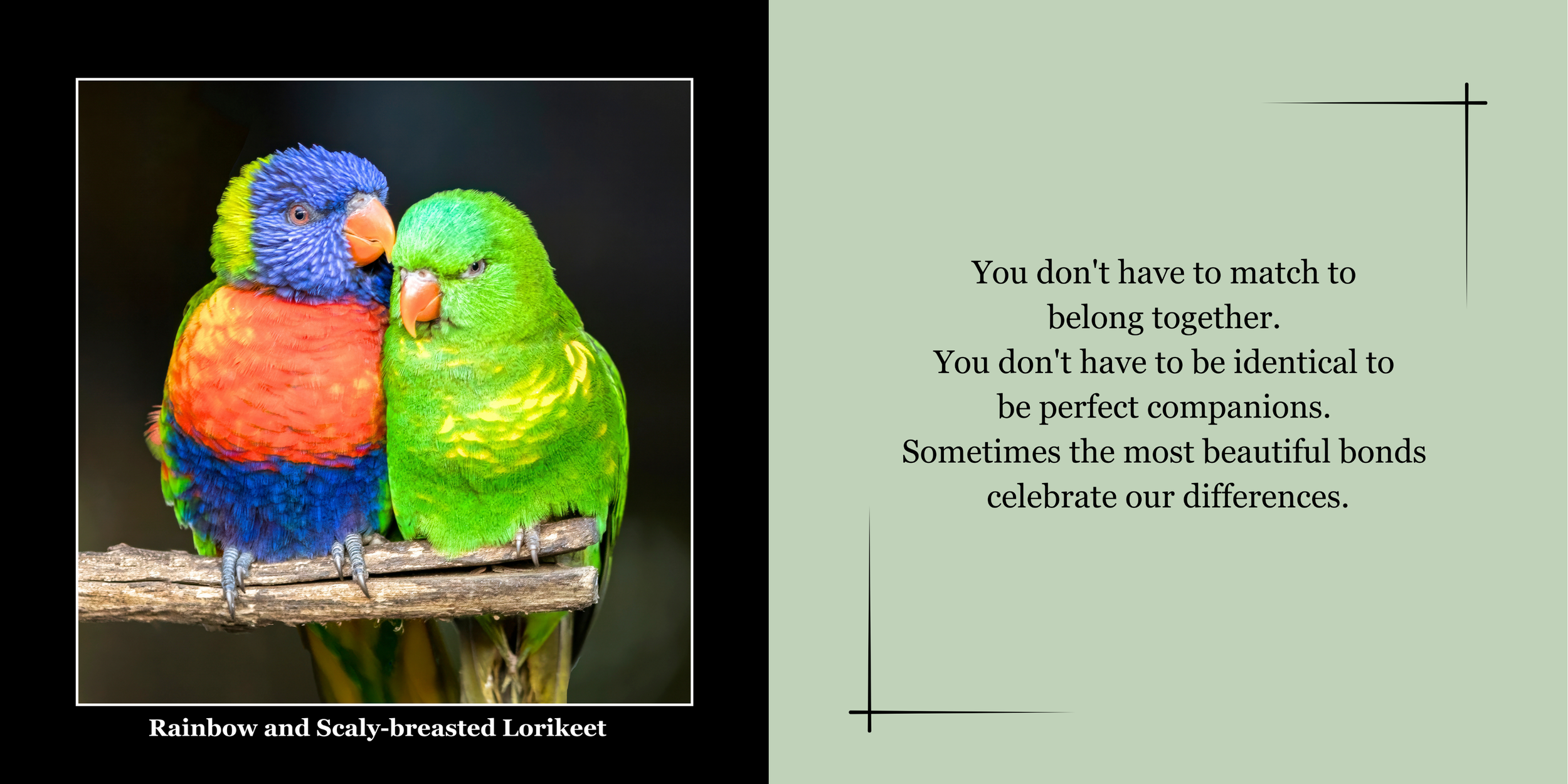
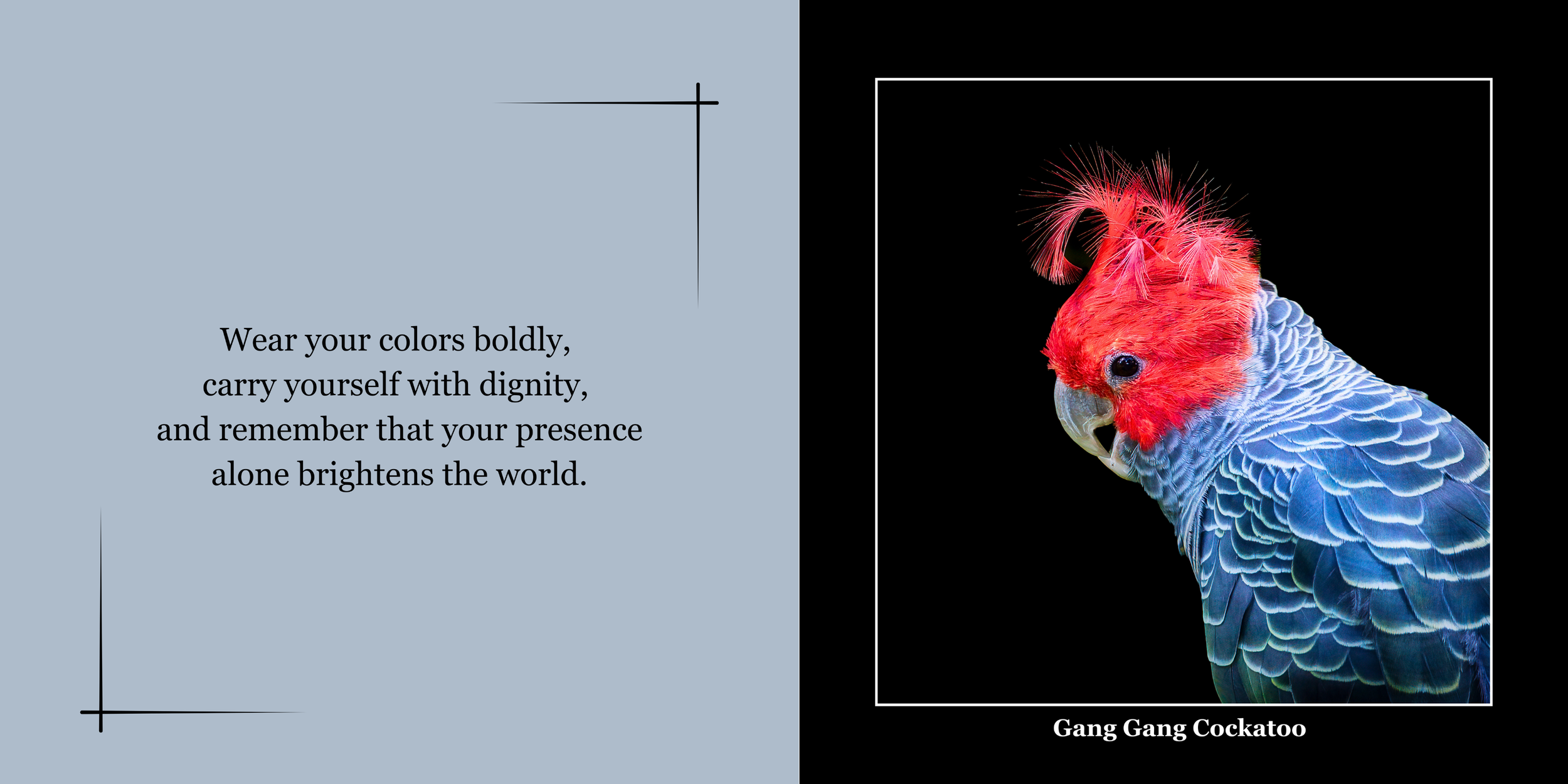
Each image is paired with an uplifting original quote encouraging the reader to find inspiration and insight in the beauty of birds
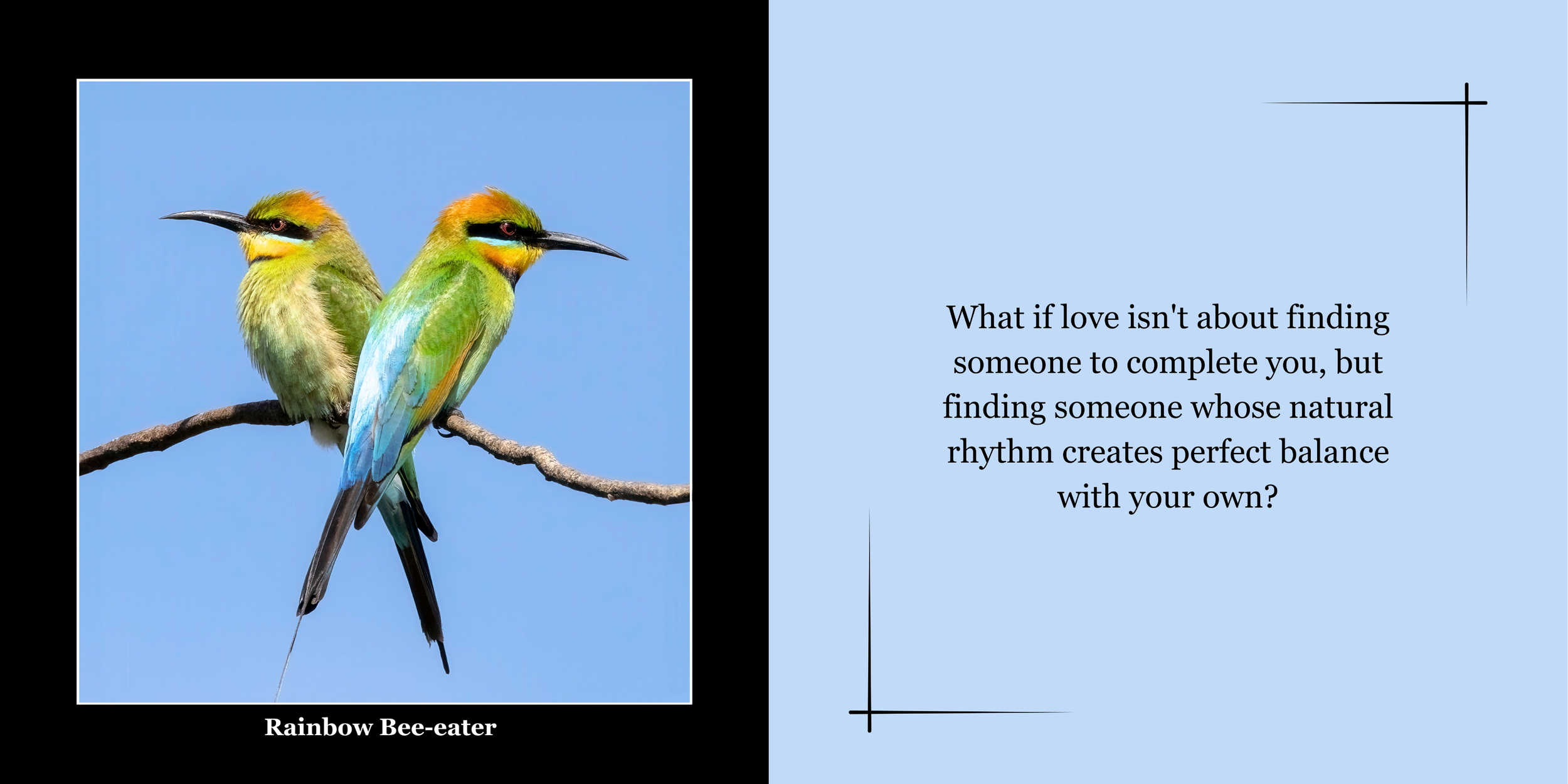
The collection features Australian birds, with most images captured by Julie close to home as a record of the remarkable birdlife that thrives in her region.
ABOUT THE AUTHOR
Julie Pallant is an award-winning photographer and psychologist whose work brings together a strong connection to nature and a long-standing professional focus on wellbeing. Based in the Ballina region of northern New South Wales, she was inspired by the rich diversity of local birdlife to take up bird photography. She set herself the challenge to capture images of all of the species of birds in her area.
Julie has had a long career as a psychologist and researcher specialising in stress, coping, and wellbeing. Her two loves, photography and psychology, come together in the Wisdom and Wonder books, where carefully crafted images are paired with thoughtful reflections that invite calm, meaning, and connection.
Scroll down to find out more about the birds featured in What Birds Can Teach Us?
Alphabetical list of the birds featured in What Birds Can Teach Us
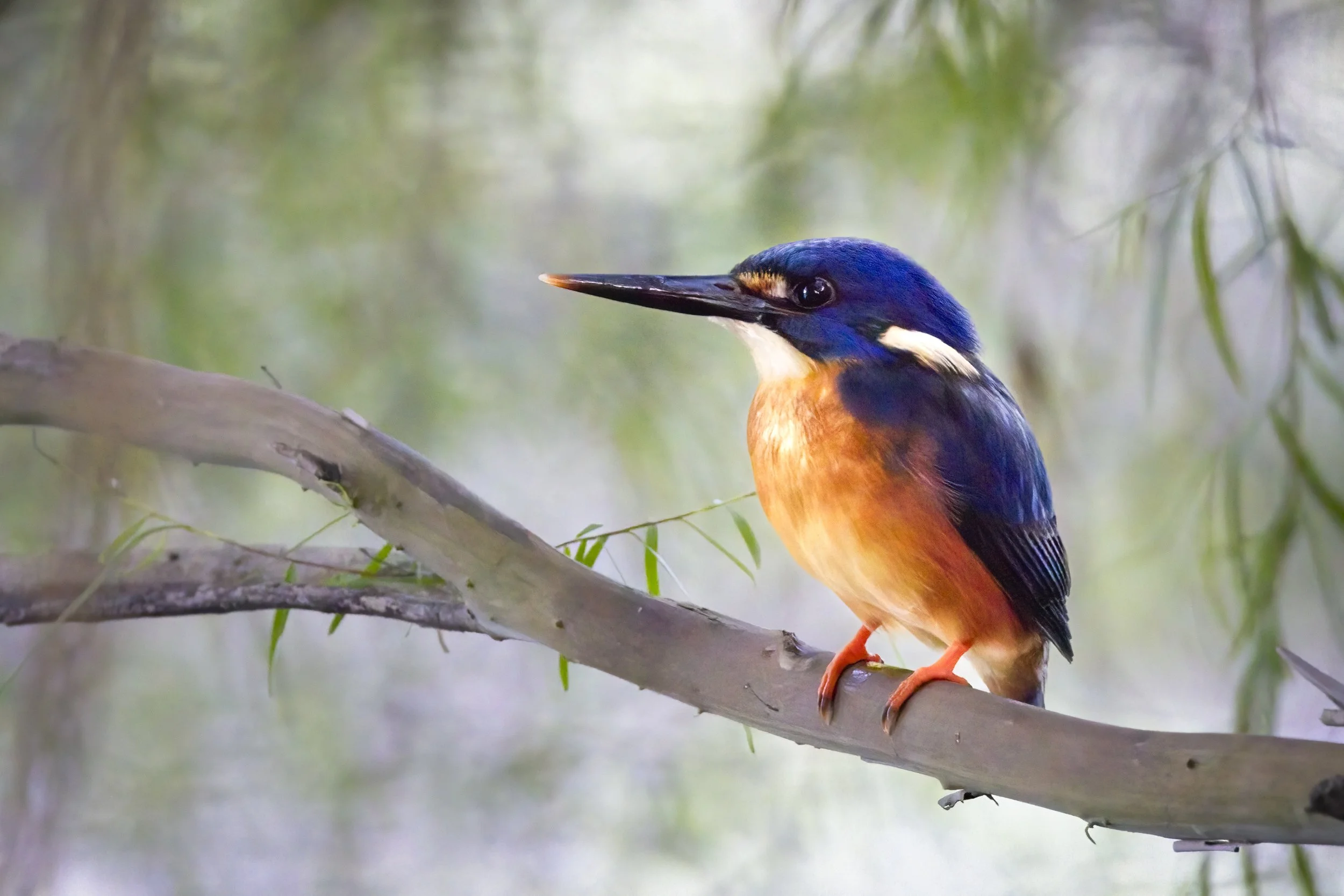
Azure Kingfisher
The Azure Kingfisher measures about 17 to 19 centimetres, with bright blue upperparts, orange underparts and a long black bill. It is found along the eastern and northern coasts of Australia, including Tasmania. It lives near creeks, rivers, lakes and mangroves, usually where there is dense vegetation for cover and overhanging branches to hunt from. It feeds on small fish, crustaceans, tadpoles and insects, diving quickly from a perch into the water to catch its prey. Nests are burrows dug into creek banks, sometimes up to a metre long, ending in a chamber where the eggs are laid. Both parents share in feeding and raising the young.
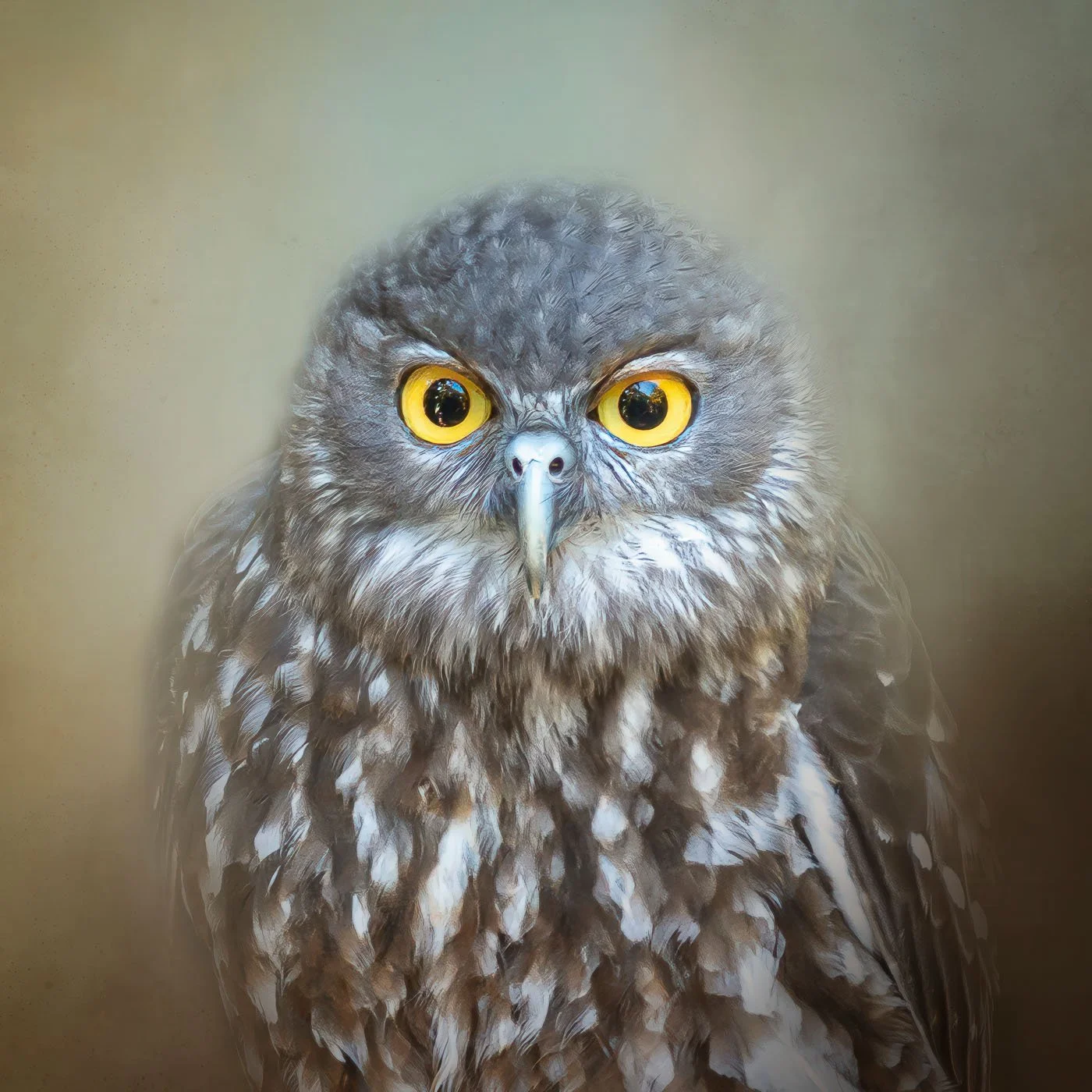
Barking Owl
The Barking Owl is a medium-sized owl, 40 to 45 cm long, with brown plumage with pale spots and distinctive large eyes. It is found across much of mainland Australia in open forests, woodlands and riverine areas, where large trees provide nesting hollows. The species is named for its characteristic call, which resembles a dog’s bark and is most often heard at night. Barking Owls feed on small mammals, birds, reptiles and insects, hunting silently from perches. They nest in tree hollows, often using the same site over many years, and form strong pair bonds.
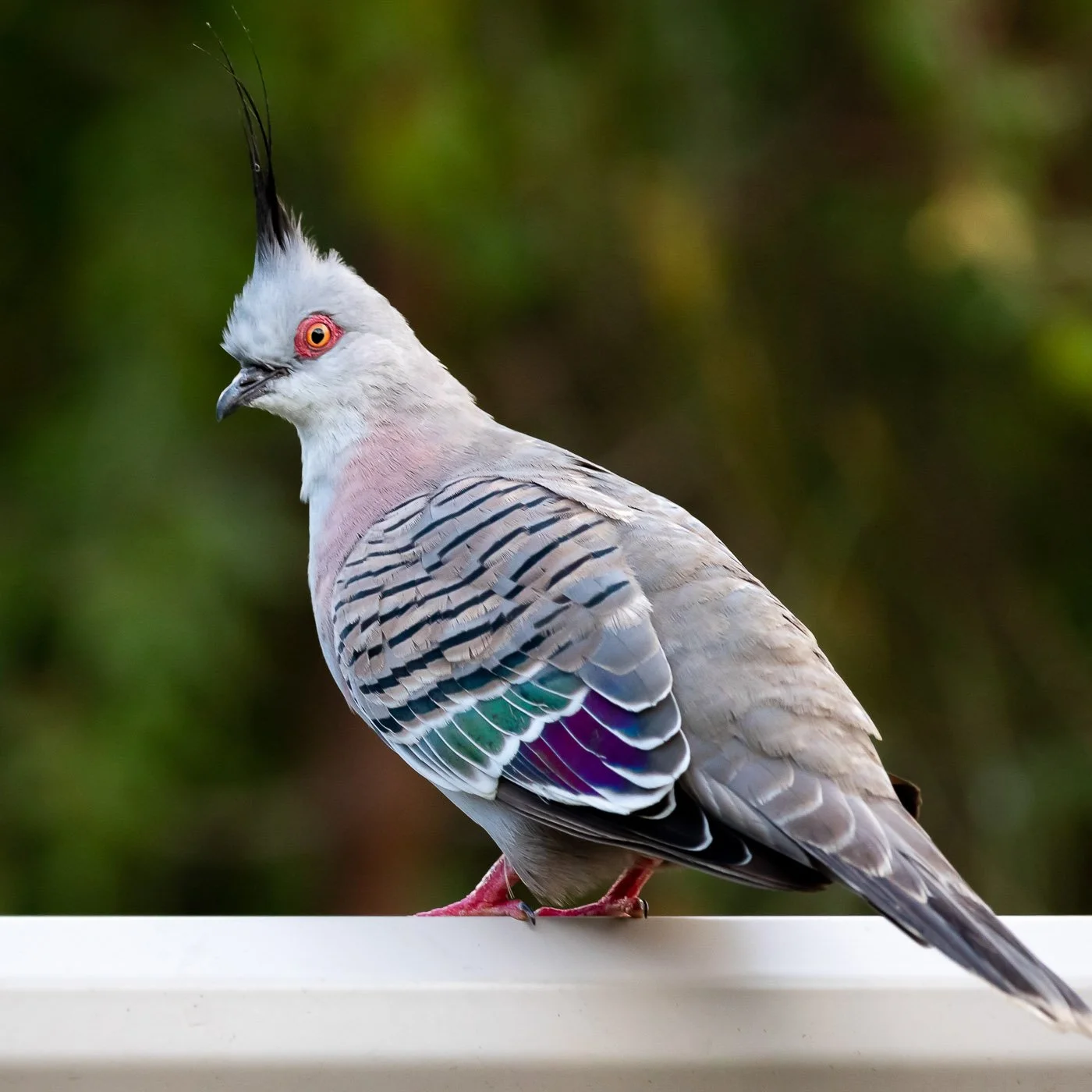
Crested Pigeon
Crested Pigeon is a common bird across much of mainland Australia, easily recognised by its slender crest, grey-brown plumage and iridescent wing patches. It is well adapted to urban environments and is often seen in parks, gardens and farmlands as well as open woodlands. Crested Pigeons feed mainly on seeds collected from the ground and are frequently observed in pairs or small flocks. When they take flight, their wings produce a distinctive whistling sound that acts as an alarm signal.
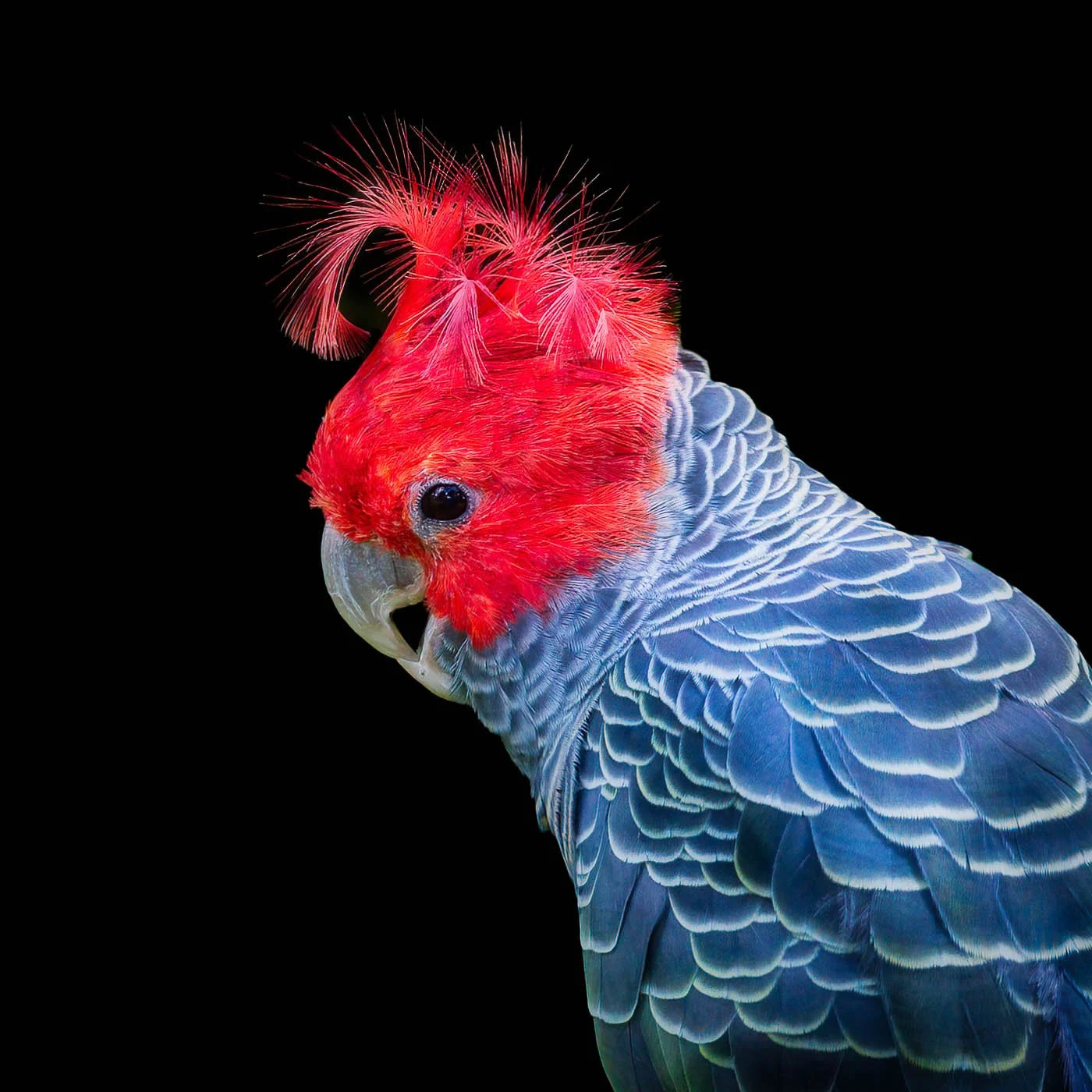
Gang-Gang Cockatoo
The Gang-gang Cockatoo is a medium-sized parrot native to southeastern Australia, including Victoria and New South Wales, and is the faunal emblem of the ACT. Males are distinctive with a wispy red crest, while females are grey with scalloped plumage. They inhabit forests and woodlands, especially in cooler, wetter regions, and are often seen in pairs or small flocks. Gang-gangs feed on seeds, berries and fruits, using their strong bills to break open tough seed capsules. They nest in tree hollows and migrate between highland and lowland forests with the seasons.
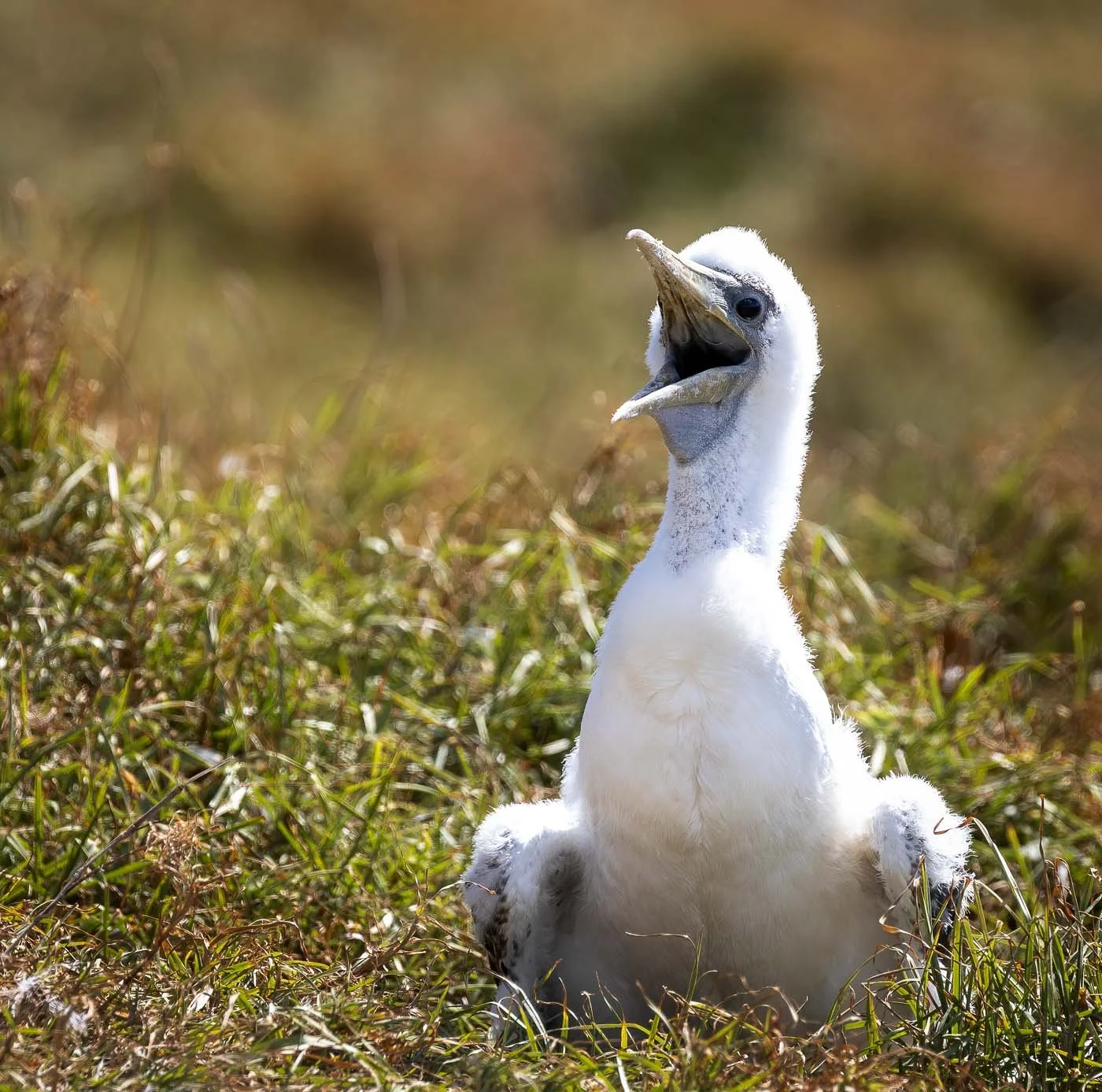
Masked Booby
The Masked Booby is a large seabird of tropical oceans, including northern Australia. It is the largest of the booby species, with a white body, black wingtips and a distinctive black mask around the eyes and bill. Juveniles are darker, with brown plumage before they moult into adult colours. Masked Boobies feed mainly on fish and squid, which they catch by diving from height into the ocean. They nest on sandy islands and lay their eggs directly on the ground, often raising only a single chick.
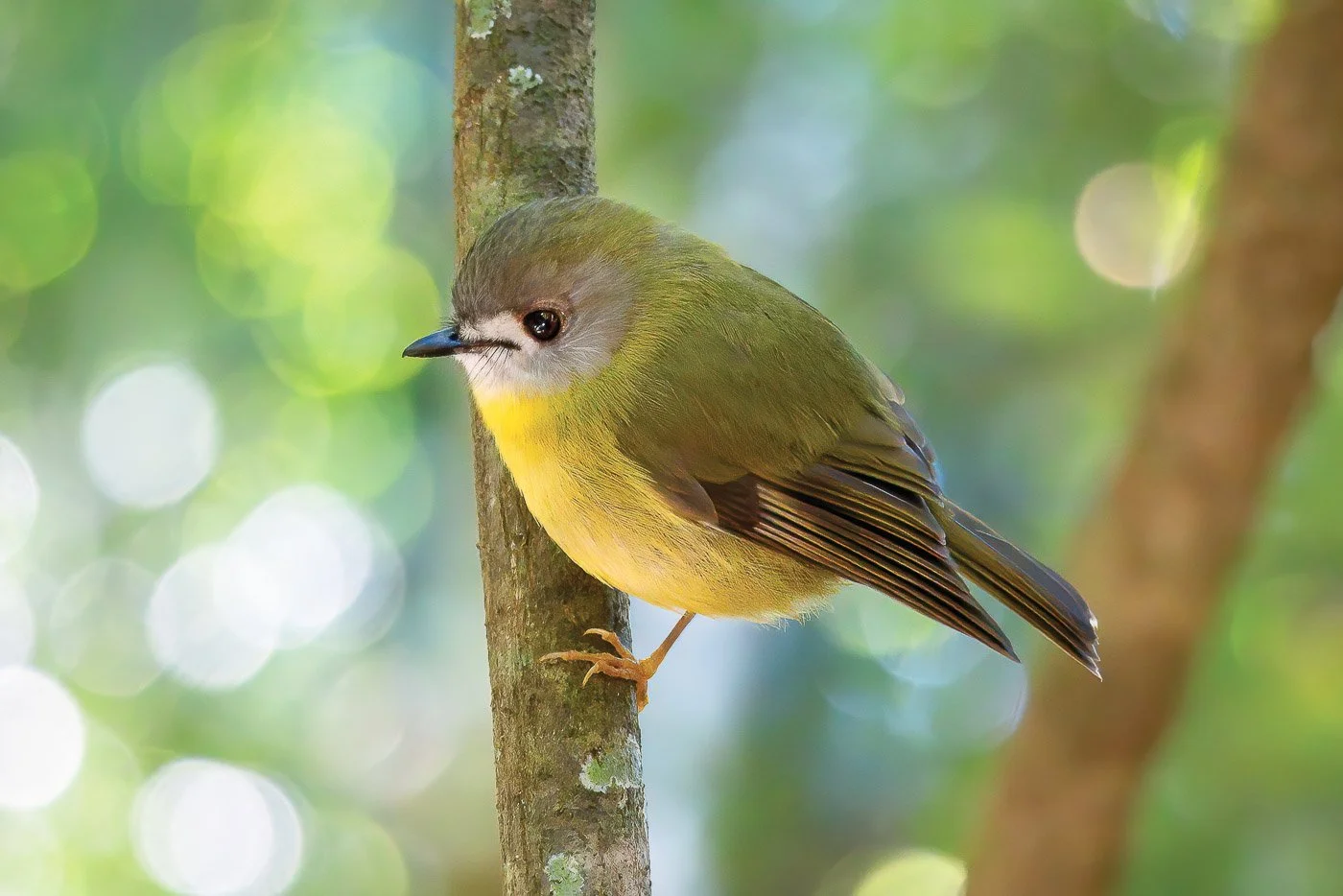
Pale-yellow Robin
The Pale-yellow Robin is a small bird of subtropical and tropical forests in eastern Australia, from northern New South Wales to Queensland. It is about 12 to 13 centimetres long, with olive-grey upperparts and soft yellow underparts. The Pale-yellow Robin is often seen low in the understorey, perching quietly and darting out to catch insects. It builds a cup-shaped nest in shrubs or saplings. Though not as conspicuous as some other robins, it is a characteristic bird of rainforest and moist eucalypt forest.
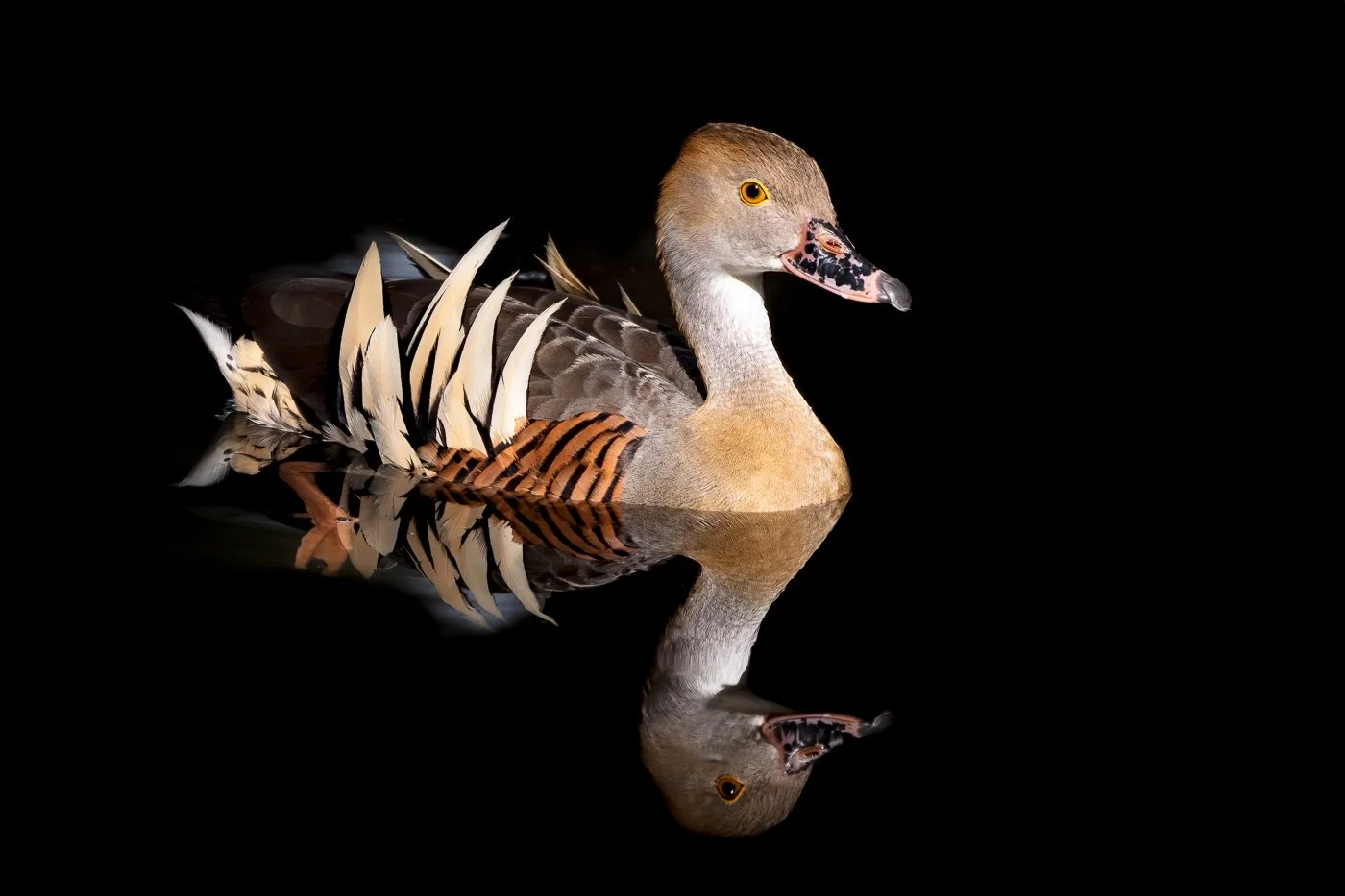
Plumed Whistling Duck
The Plumed Whistling Duck is a medium-sized waterfowl found widely across northern and eastern Australia. It is easily recognised by its long neck, chestnut flanks and decorative white-edged plumes rising from its sides. These ducks prefer tropical grasslands, wetlands and dams where they graze on grasses, mainly feeding at night. They are highly social birds, often seen in large flocks, and their whistling calls are a familiar sound in their range. Breeding usually occurs after rain, with nests built in tall grass near water.
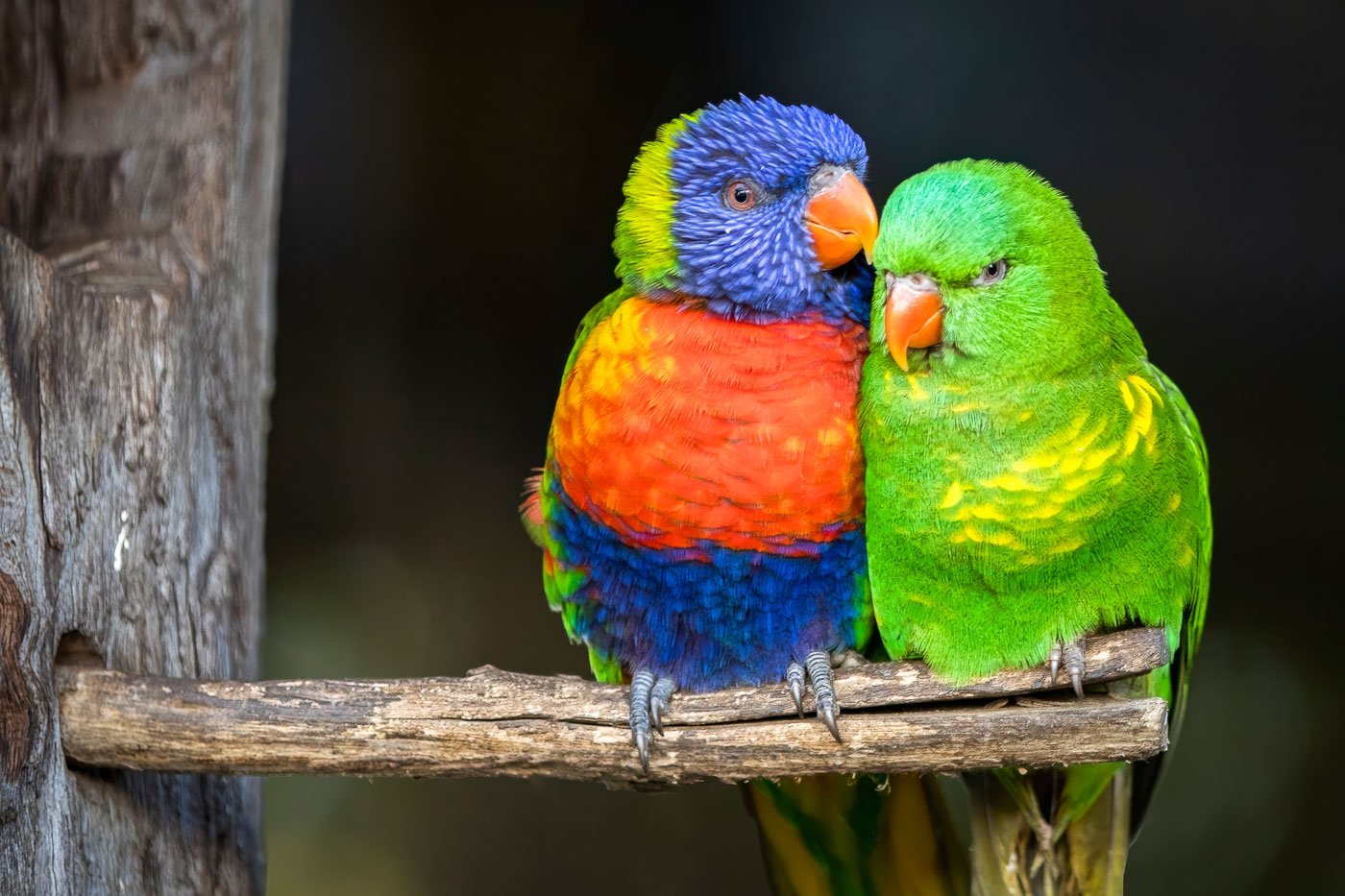
Rainbow Lorikeet
The Rainbow Lorikeet is a very colourful parrot native to eastern and northern Australia, with some populations in Western Australia due to introductions. It has a bright red beak, blue head, green wings and tail, and an orange-yellow breast. Rainbow Lorikeets are common in urban parks, gardens, woodlands and coastal forests, feeding mainly on nectar and pollen from flowering trees, as well as fruit. They are highly social and noisy, often seen in flocks. They nest in tree hollows and form strong pair bonds.
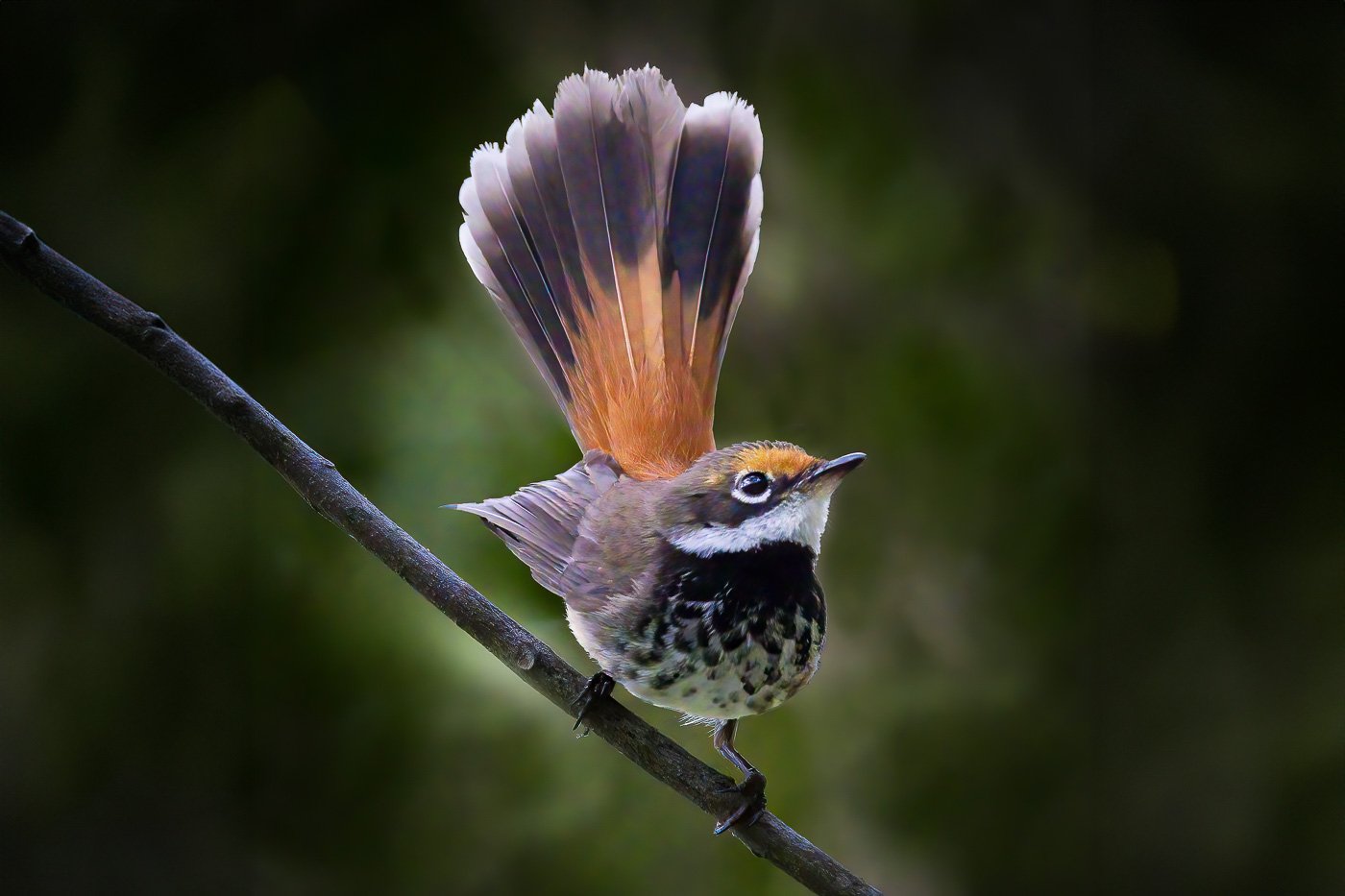
Rufous Fantail
The Rufous Fantail is a small insect-eating bird found in northern and eastern Australia, Tasmania, New Guinea and nearby islands. It is known for its rufous tail, white throat and constant tail-fanning behaviour. Rufous Fantails inhabit rainforests, wet sclerophyll forests and mangroves, where they actively chase insects in quick, darting flights. They migrate seasonally, moving south to breed and returning north in winter. Their nests are neat cups made of grass and spiderweb, suspended on branches.
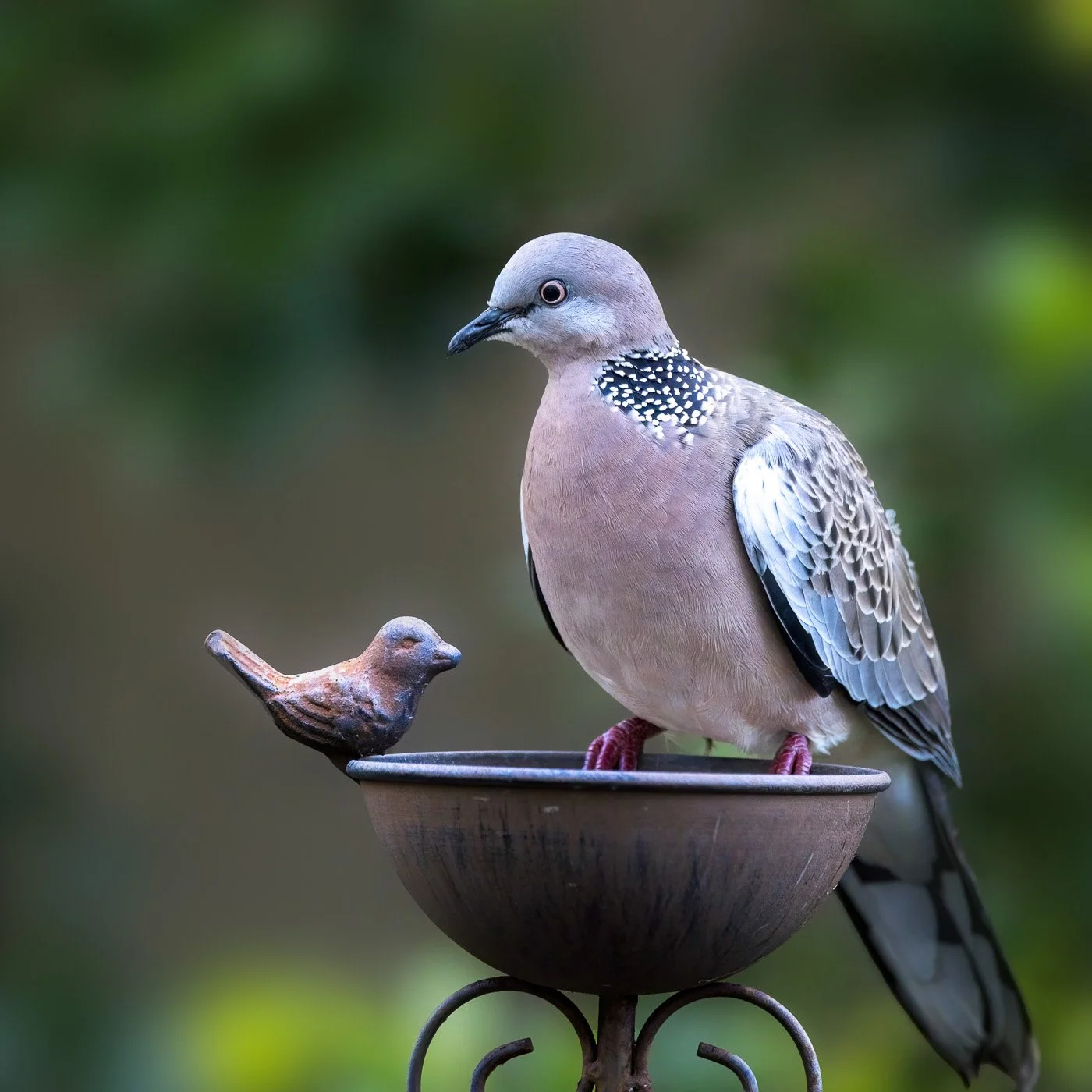
Spotted Dove
The Spotted Dove is a medium-sized pigeon, originally native to Asia but now well established across eastern and southern Australia. It is about 30 centimetres long with brown plumage, spotted wings, and a distinctive black collar with white spots. Spotted Doves are common in cities, towns, gardens and farmlands, feeding mainly on seeds and grain. They build flimsy stick nests in trees or shrubs, where they usually lay two white eggs. The soft, cooing call of this species is a familiar sound in many suburban areas.
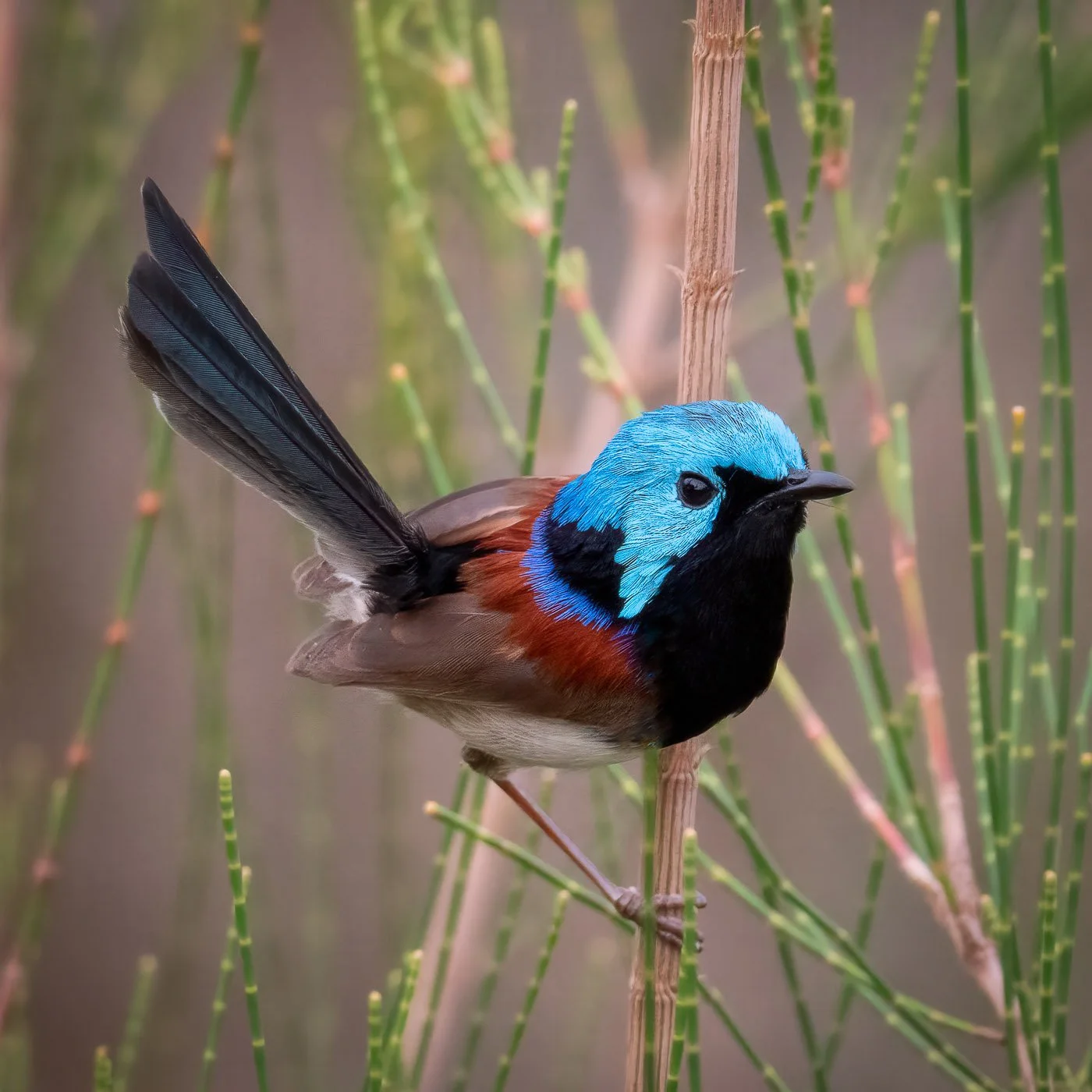
Variegated Fairywren
The Variegated Fairywren is a small, colourful songbird found across much of Australia, except the driest deserts. Males in breeding plumage display bright blue crowns, black throats and chestnut shoulders, while females are brownish with reddish around the eye. They inhabit woodlands, heathlands, scrub and gardens, feeding on insects and small arthropods. Like other fairywrens, they live in cooperative groups and show complex social behaviour. Their rapid, energetic movements and flashes of colour make them one of the most attractive of the fairywrens.
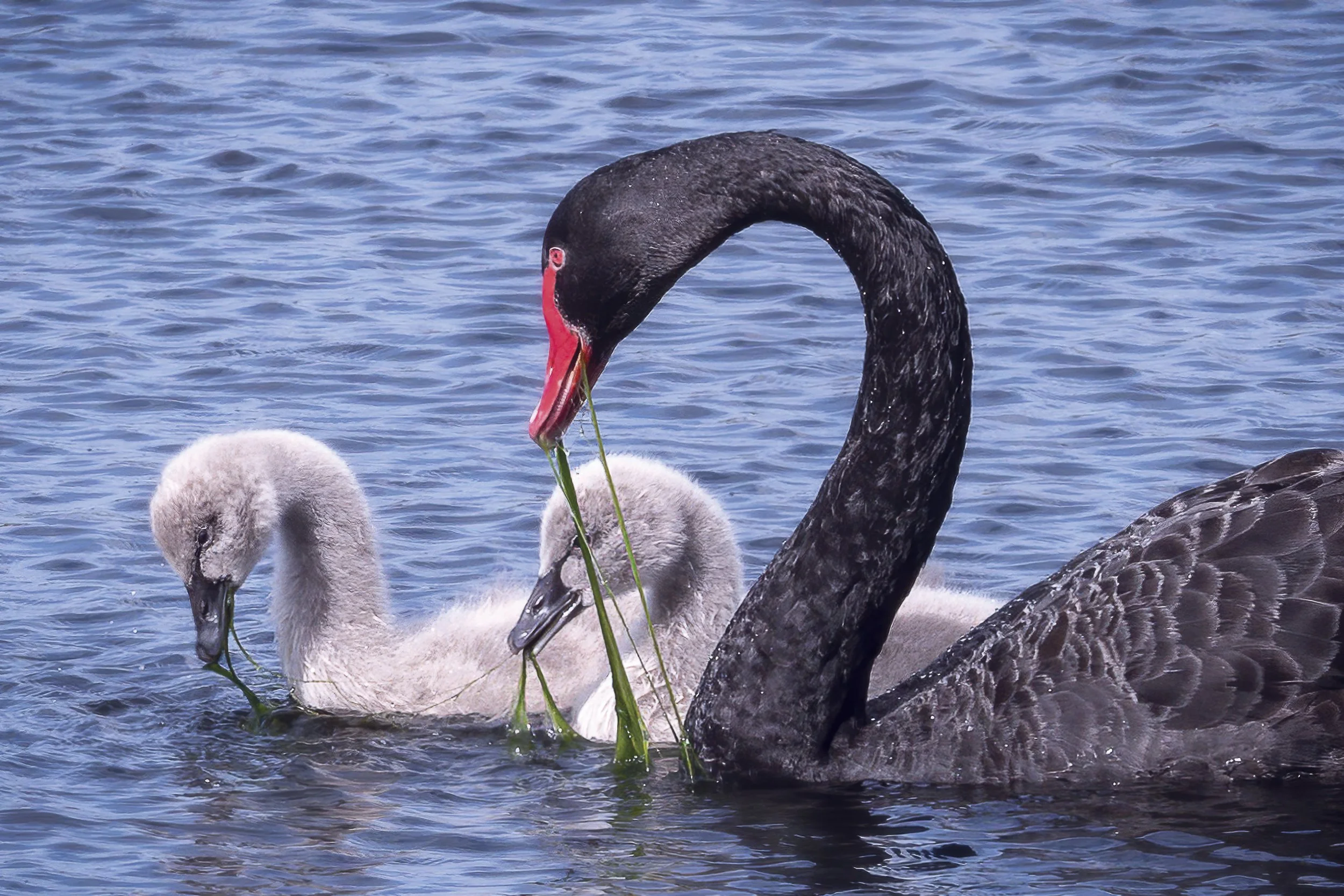
Black Swan
The Black Swan is a large waterbird native to Australia, easily recognised by its black plumage, red bill and long neck. It is found across much of the continent, particularly in the southeast and southwest, and has also been introduced to New Zealand and some other regions. Black Swans inhabit lakes, rivers, estuaries and wetlands, feeding mainly on aquatic plants which they reach by up-ending in the water. They form strong pair bonds, often for life, and both parents share in raising the young.
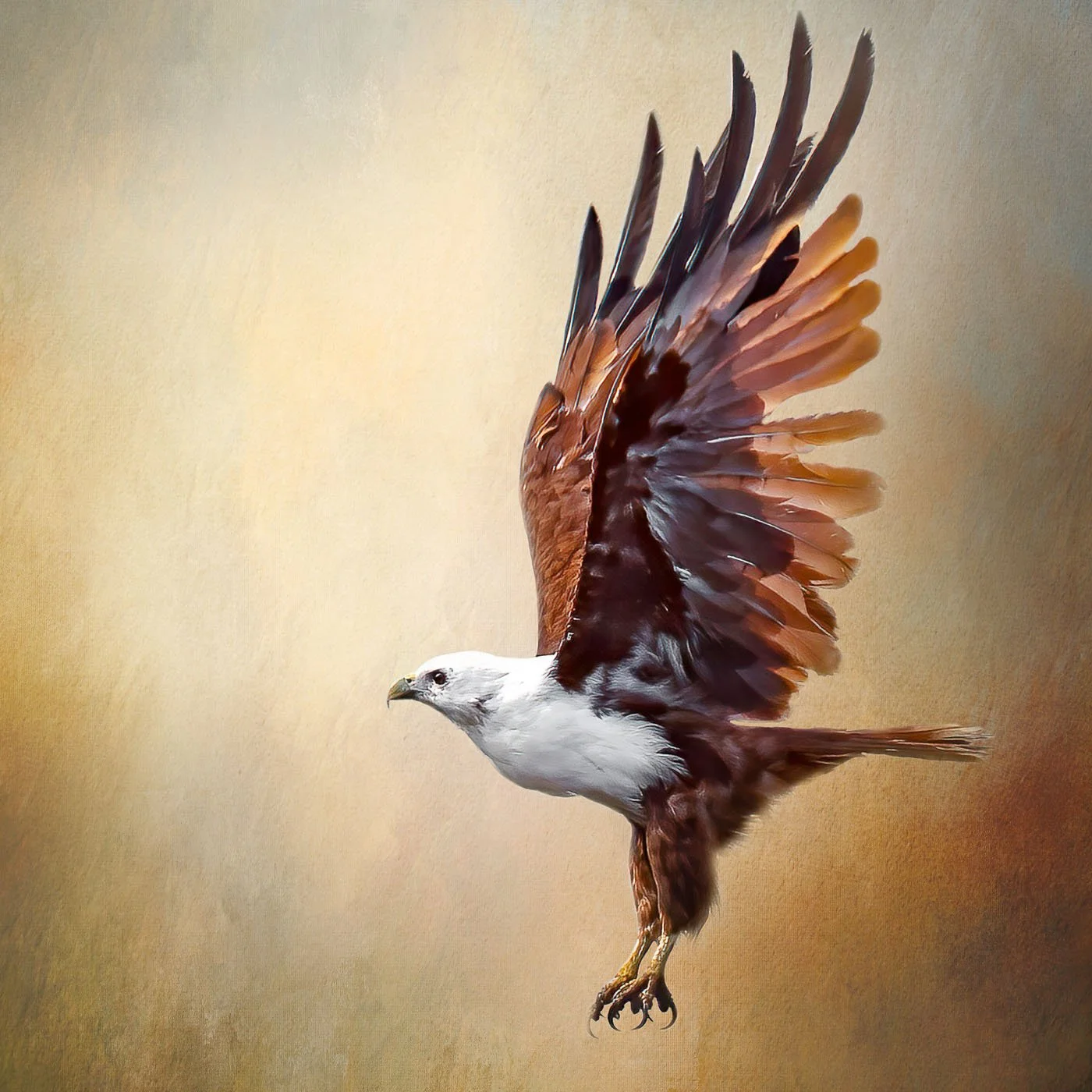
Brahminy Kite
The Brahminy Kite is a medium-sized raptor with distinctive chestnut plumage and contrasting white head and breast. It is found along coastlines and rivers across northern and eastern Australia, and has a wide distribution through Southeast Asia. It feeds mainly on fish and carrion, often scavenging around fishing ports and coastal areas. It is commonly seen soaring gracefully over water. The species builds large stick nests in tall trees near rivers or shorelines and is usually observed singly or in pairs.
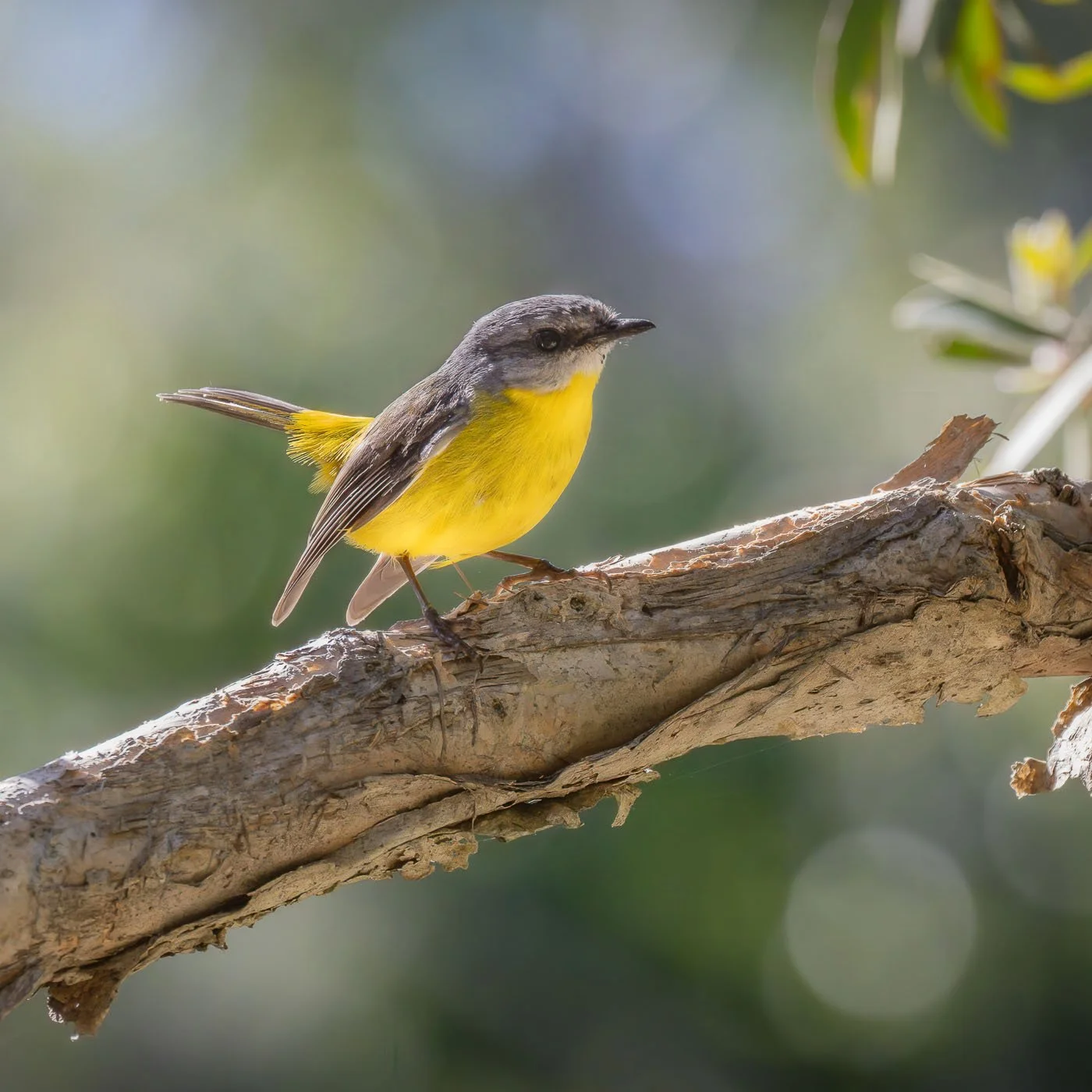
Eastern Yellow Robin
The Eastern Yellow Robin is a small bird measuring about 15 to 16 centimetres in length, with olive-grey upperparts, a bright yellow belly and a white throat. It is found along the eastern coast and ranges of Australia, inhabiting forests and woodlands with dense understorey. It feeds mainly on insects, which it catches by perching low and darting down to the ground in short, direct flights. Eastern Yellow Robins are usually seen alone or in pairs and are known for their gentle, inquisitive behaviour. They build a small cup-shaped nest of bark, moss and grass, often placed in a fork of a tree.
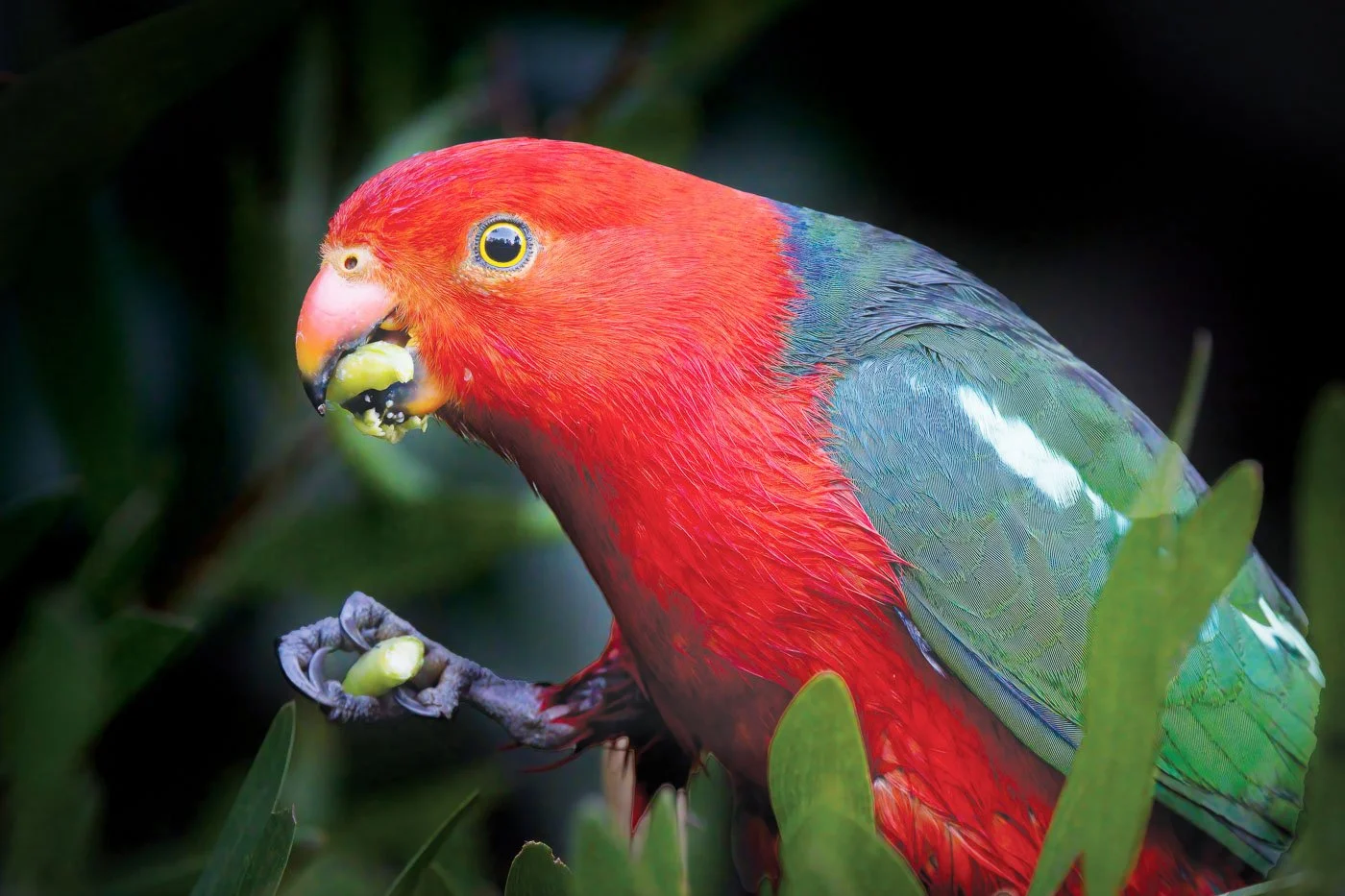
King Parrot
The Australian King Parrot is a large, brightly coloured parrot measuring about 40 to 43 centimetres in length. Males are easily recognised by their vivid red head and chest, contrasting with green wings and back, while females are mostly green with a red belly. This species is found along the eastern coast of Australia, from forests and woodlands to parks and gardens, especially near water. King Parrots feed on seeds, fruit, berries and blossoms, usually foraging high in the canopy. They nest in tree hollows, with pairs remaining together throughout the breeding season.
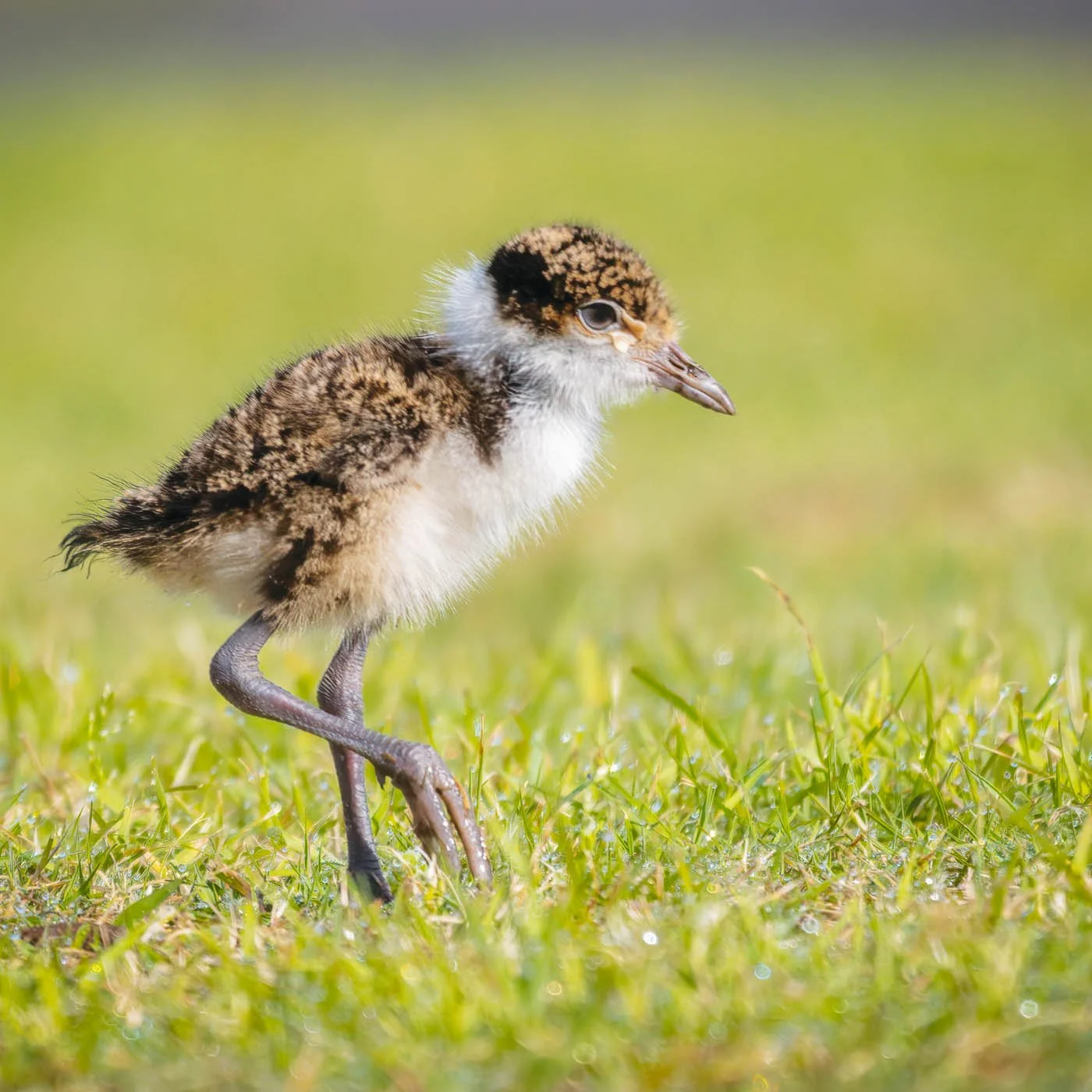
Masked Lapwing
The Masked Lapwing is a large, ground-dwelling plover widely found across Australia, New Guinea and New Zealand. It has a white body, brown wings, black cap and yellow wattles on the face. Masked Lapwings are commonly seen in grasslands, wetlands, parks, golf courses and even airports. They feed on insects, worms and other invertebrates, foraging by walking and probing the ground. They are well known for their loud, harsh calls and their defensive behaviour during breeding, swooping at intruders near their nests.
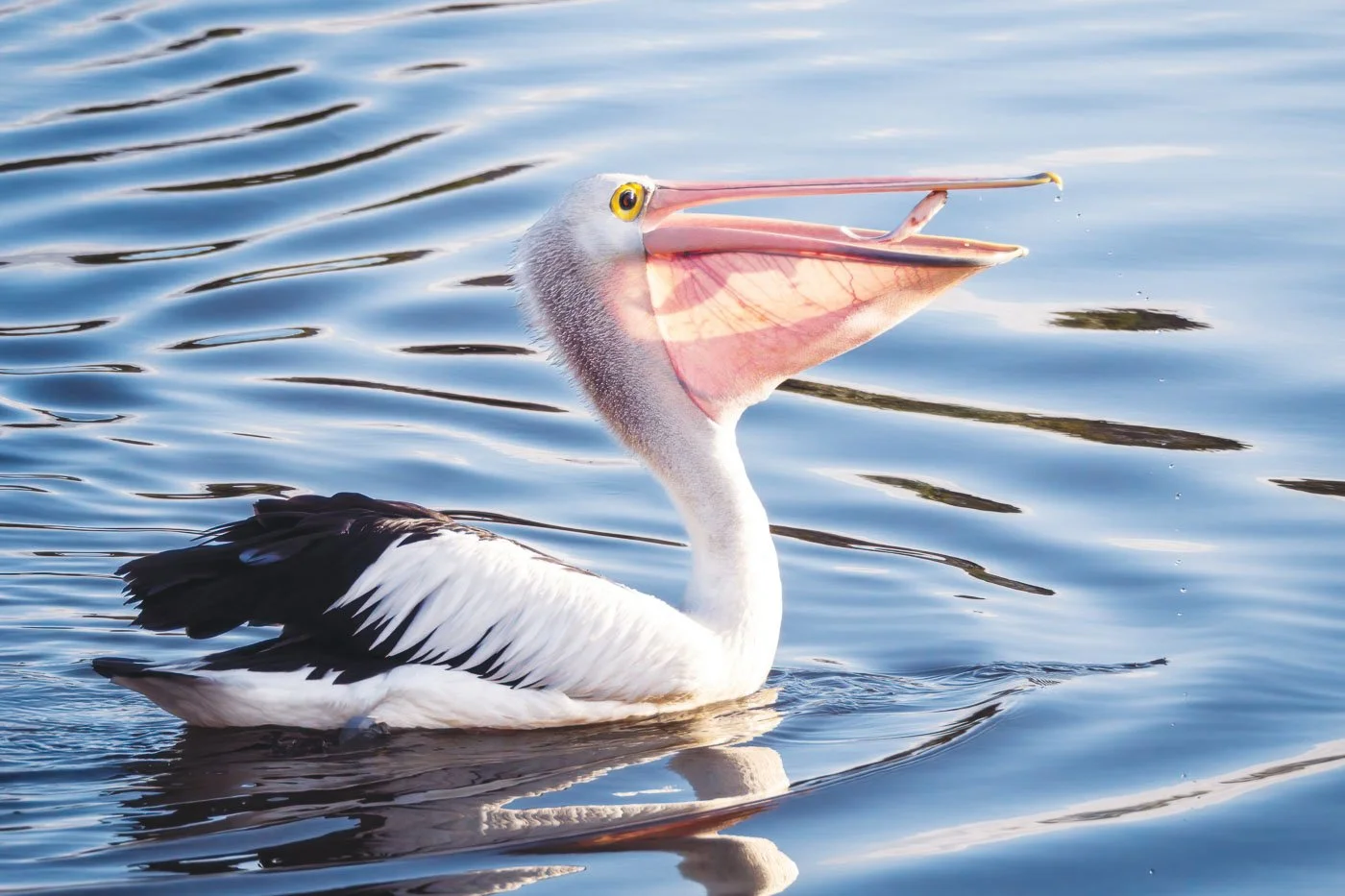
Pelican (Australian)
The Pelican, specifically the Australian Pelican, is one of the world’s largest flying birds, with a wingspan of up to 2.6 metres. It is found across most of Australia wherever large bodies of water occur, including lakes, rivers, estuaries and coastal lagoons. The pelican is easily recognised by its enormous bill, which can reach 40 centimetres long, and its white plumage with black wing feathers. It feeds mainly on fish, scooping them up with its bill pouch. Pelicans breed colonially on isolated islands or wetlands, building nests on the ground.
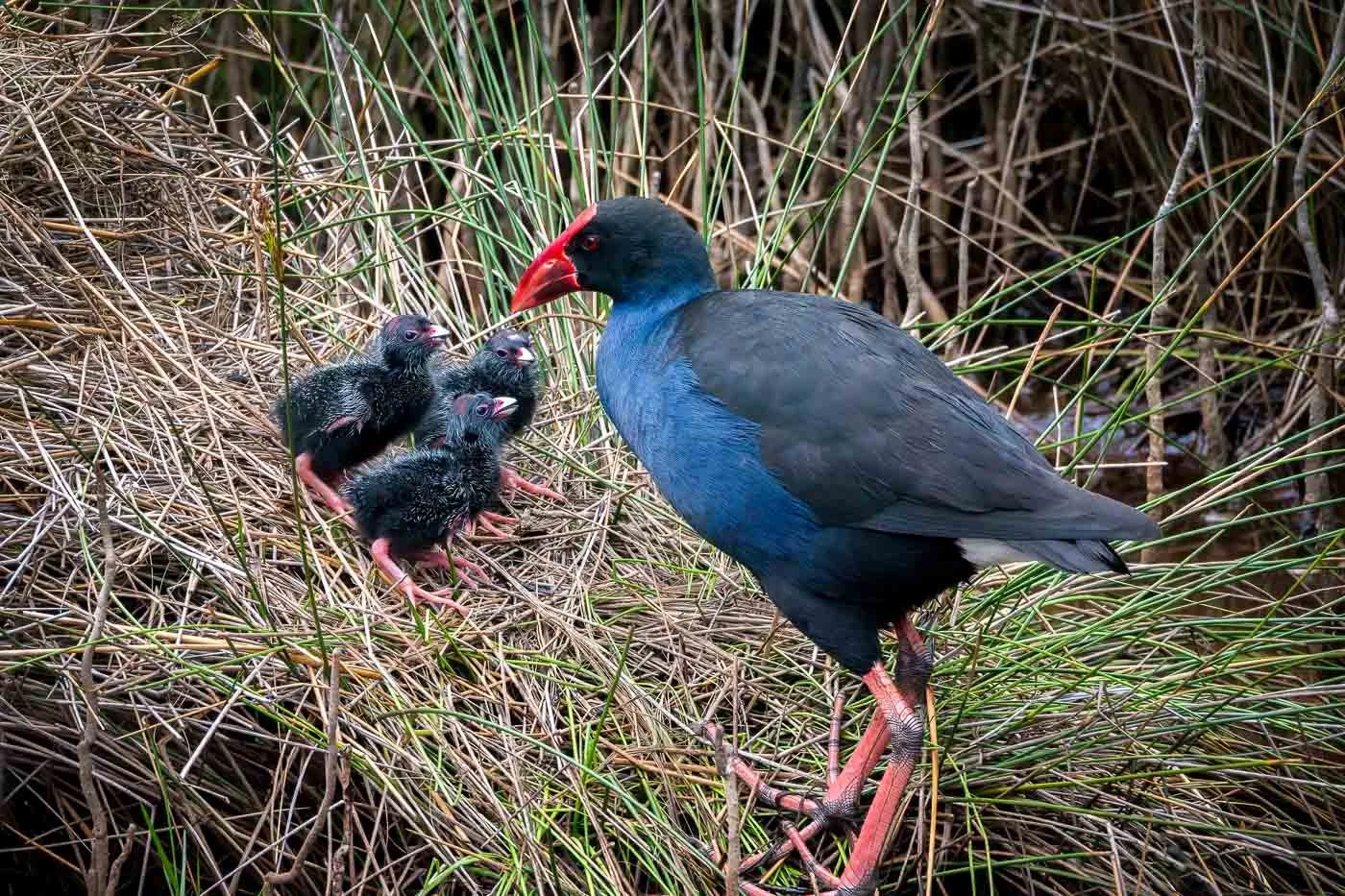
Purple Swamphen
The Purple Swamphen is a large waterbird measuring around 45 centimetres in length, with deep blue and purple plumage, a red bill and shield, and long legs and toes. It is widespread across eastern and northern Australia, inhabiting wetlands, swamps, lakes and waterways. This species feeds mainly on plant material such as reeds, grasses and shoots, but will also take insects and small animals. They build bulky nests of reeds and grasses close to or over water and often live in family groups.
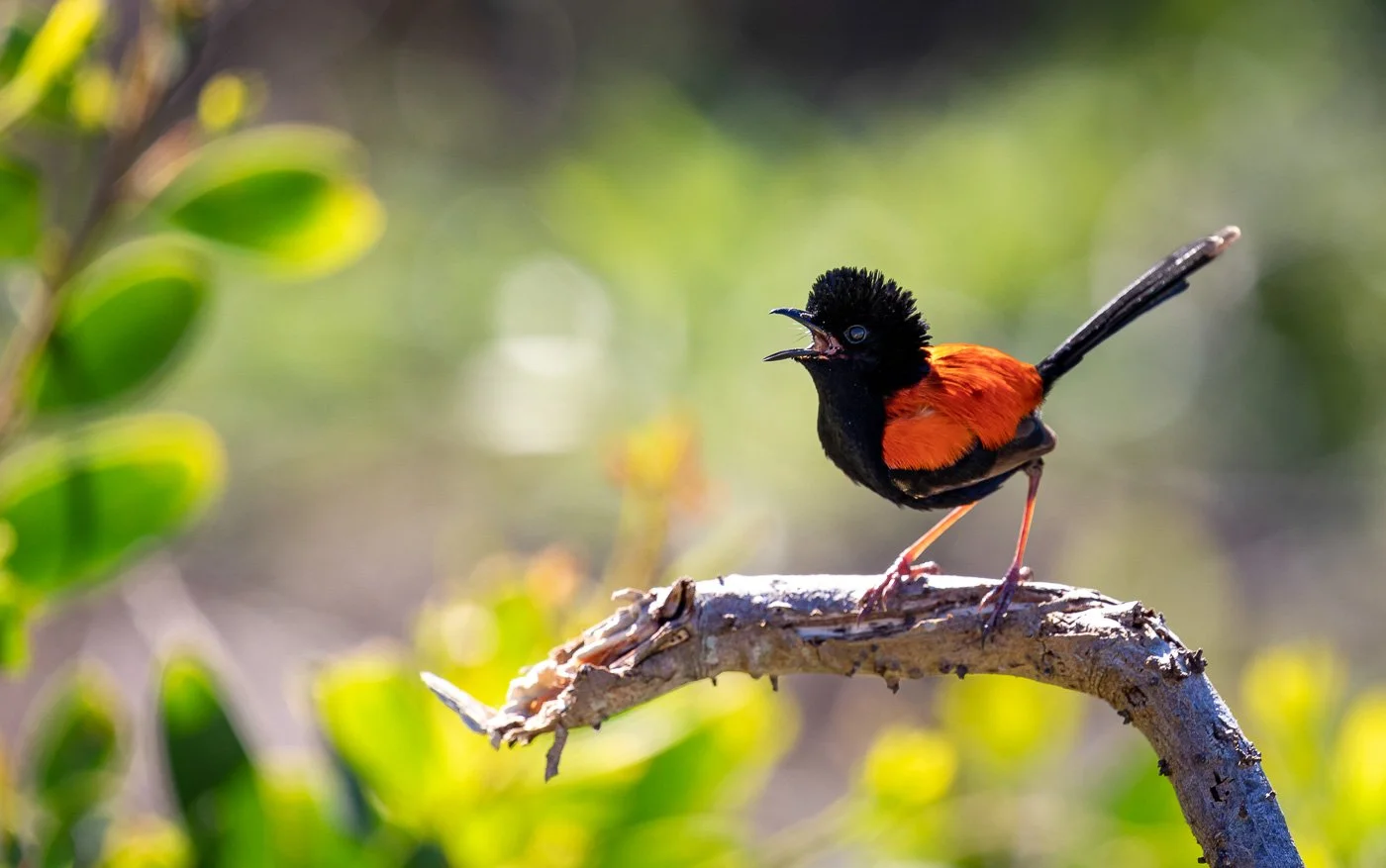
Red-backed Fairywren
The Red-backed Fairywren is a small bird of northern and eastern Australia, with males in breeding plumage showing black bodies and bright red backs. Females and non-breeding males are brown with a pale underside. These fairywrens live in grasslands, open forests and savannahs, where they feed on insects and small arthropods. They are social birds living in groups, with cooperative breeding where young from previous seasons help to raise chicks.
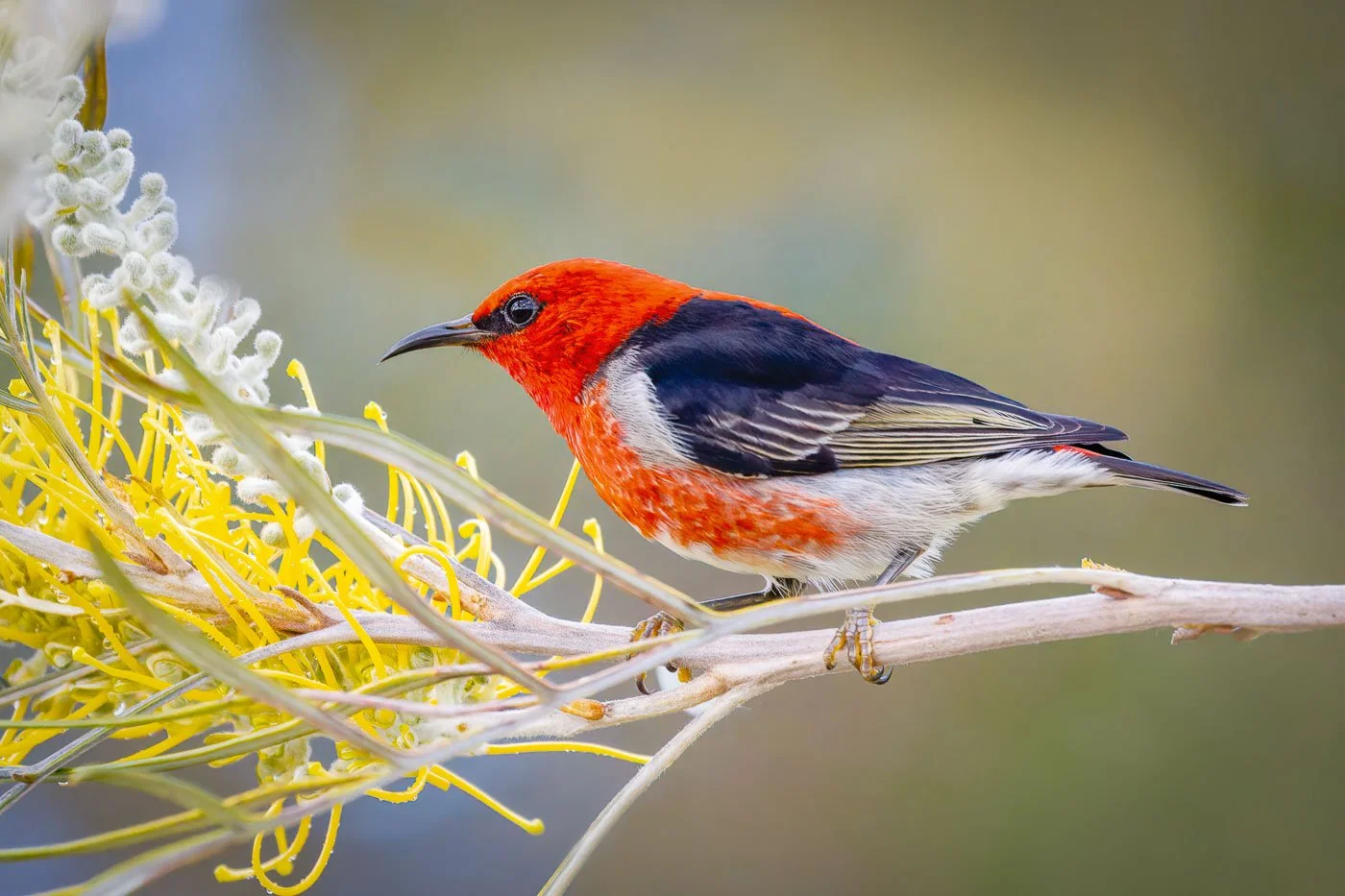
Scarlet Honeyeater
The Scarlet Honeyeater is a tiny bird, only about 11 centimetres long, and is one of the smallest Australian honeyeaters. Males in breeding plumage are brilliant red on the head, throat and chest with black wings, while females are grey-brown with only a touch of red. They are found along the eastern seaboard of Australia, from northern Queensland down to Victoria, and in New Guinea. It prefers forests, woodlands and gardens where flowering eucalypts and grevilleas provide nectar. It also feeds on insects. Their presence is easily detected by their high-pitched calls.
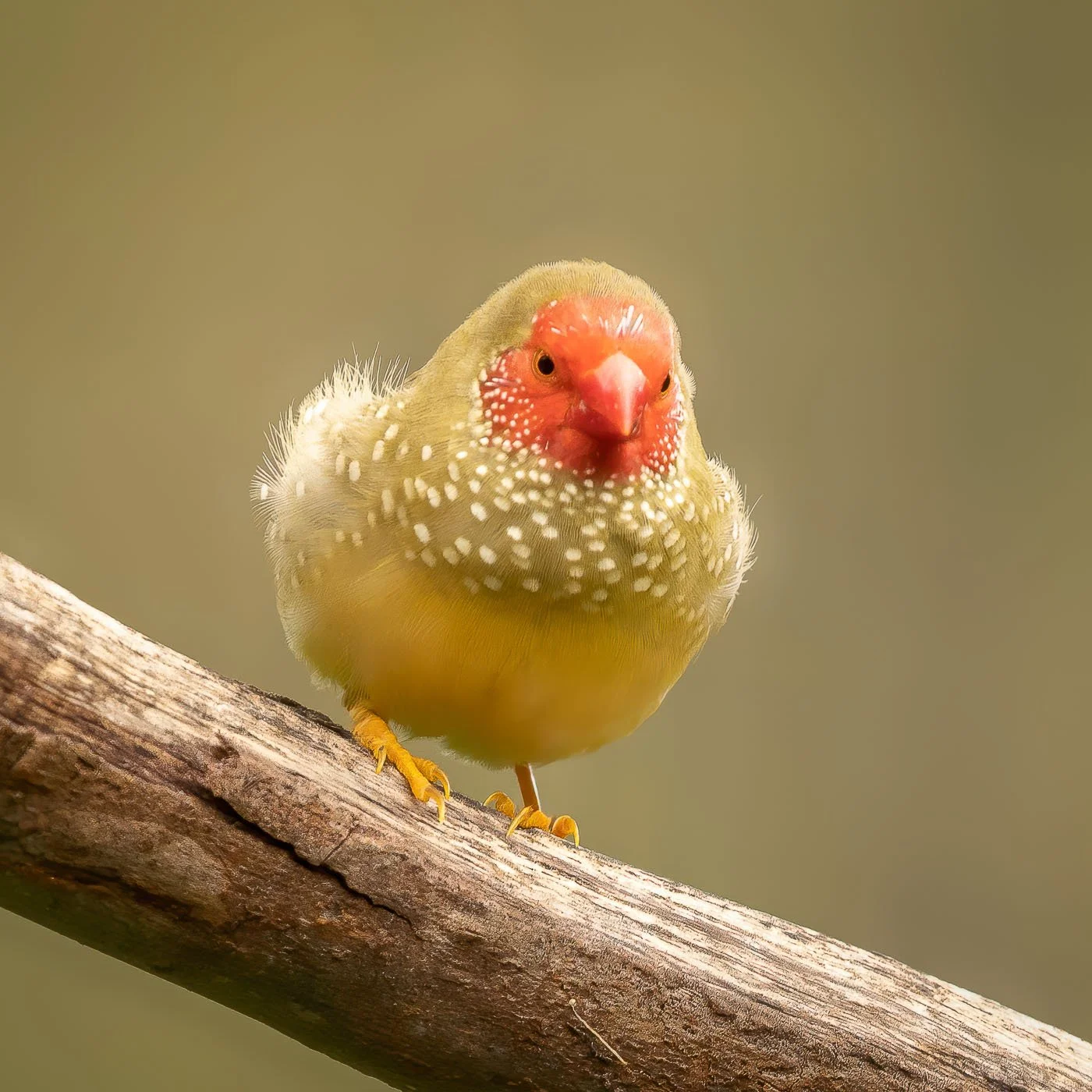
Star Finch
The Star Finch is a small finch about 12 centimetres long, with a bright red face, yellow underparts and fine white spots on its breast and flanks. It occurs in northern Australia, particularly in the Kimberley region and parts of Queensland, and is also found in New Guinea. The species inhabits grasslands, wetlands and riversides, feeding mainly on grass seeds. Star Finches are often observed in flocks. In the wild, populations have declined due to habitat loss, making them less common than other finches.
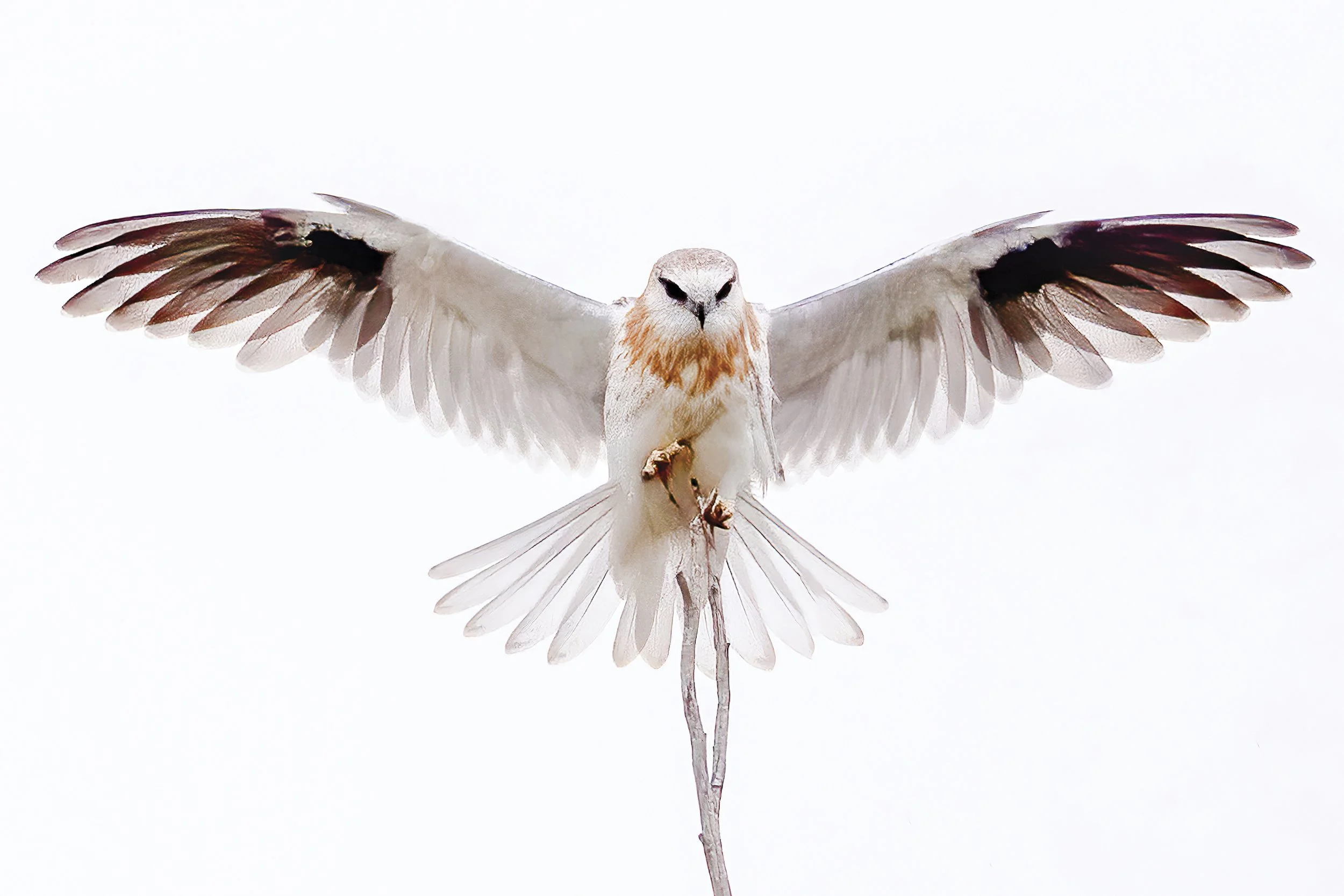
Black-shouldered Kite
The Black-shouldered Kite is a small raptor measuring around 35 centimetres, with pale grey plumage, black shoulder patches and red eyes. The juvenile is more brownish, with streaking on the chest. This species is found throughout mainland Australia in open habitats such as grasslands, farmland and roadsides where it hunts small mammals, especially mice. It hovers in place before swooping on prey, a behaviour that makes it easy to identify. Black-shouldered Kites nest in trees, with both parents involved in raising the brood.
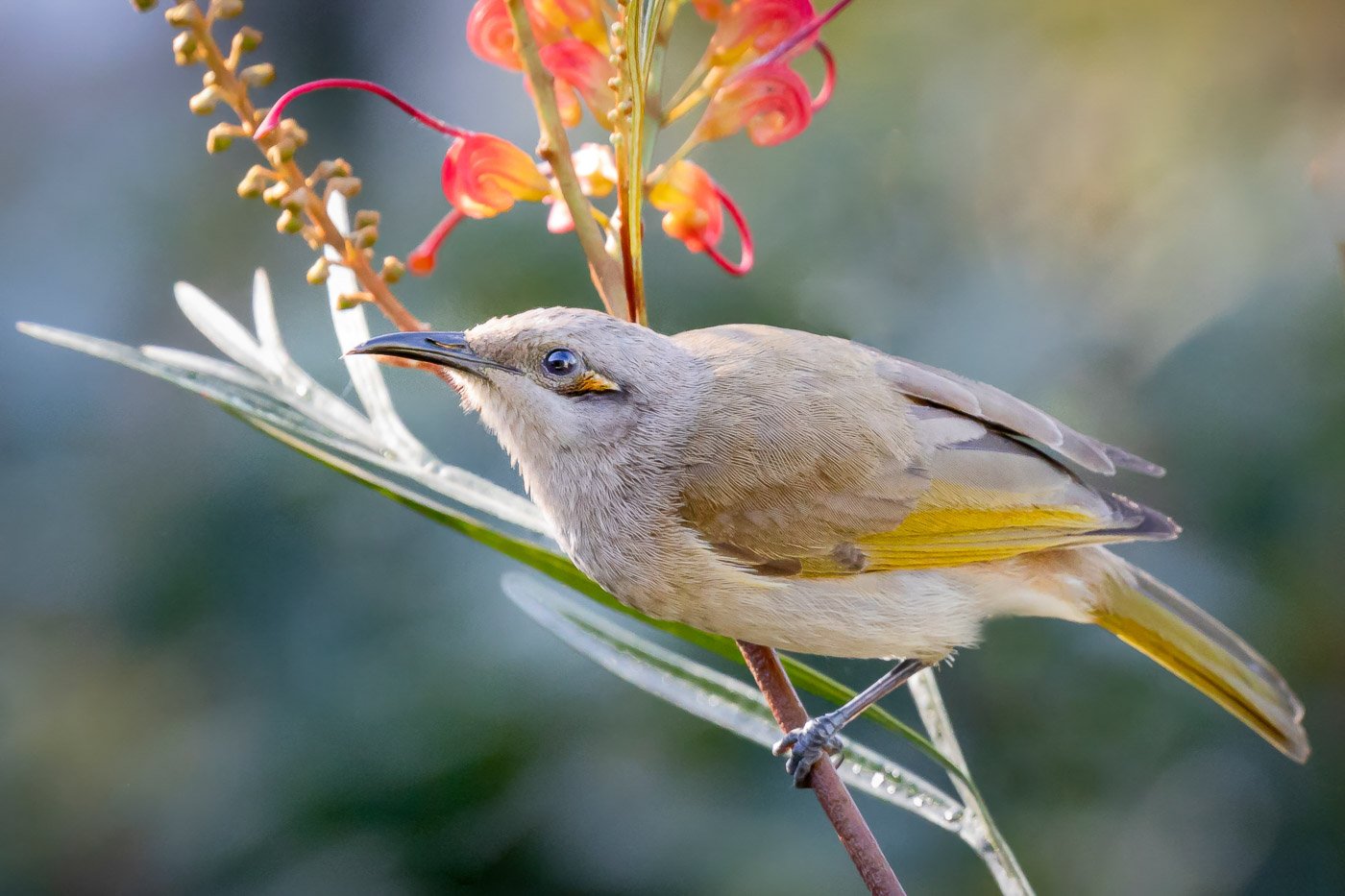
Brown Honeyeater
The Brown Honeyeater is a small bird, 12 to 17 centimetres long, with mostly brown plumage and a small yellow patch behind the eye. It is widespread across northern and eastern Australia and occurs in a variety of habitats, from forests and woodlands to gardens and urban parks. Brown Honeyeaters feed on nectar, insects and small fruit, often visiting flowering native plants such as grevilleas and eucalypts. They have a loud, distinctive call for their size and are common in suburban areas where suitable flowers are available.
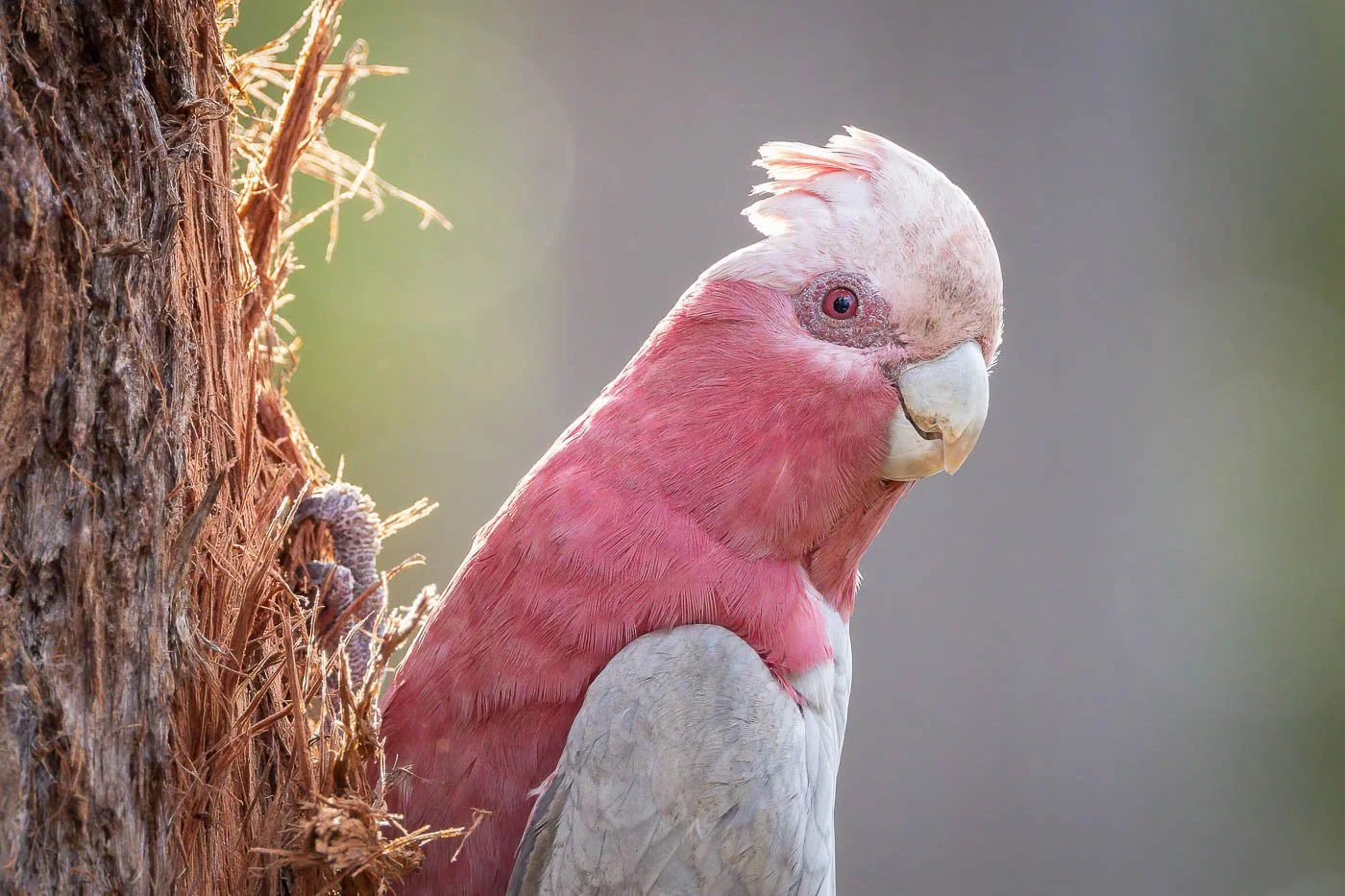
Galah
The Galah, also known as the Rose-breasted Cockatoo, is a common and widespread parrot across most of Australia. It is easily identified by its pink chest and face, grey wings and playful behaviour. Galahs are highly social, often gathering in large flocks in open country, farmlands, parks and towns. They feed on seeds, grasses and grains, often foraging on the ground. Galahs nest in tree hollows and form long-term pair bonds. They are known for their noisy calls and acrobatic flight, and have adapted well to human-modified landscapes.
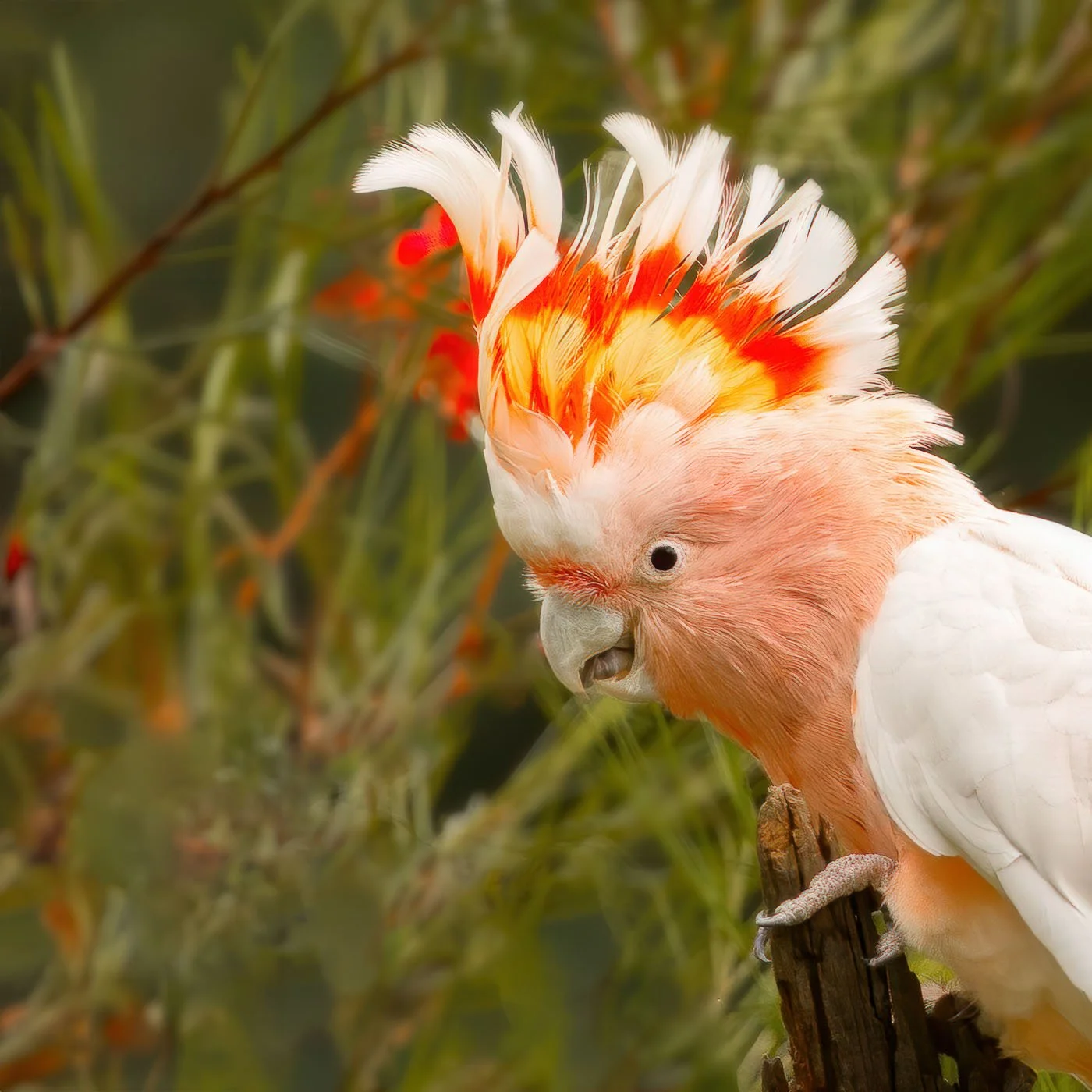
Major Mitchell’s Cockatoo
The Major Mitchell’s Cockatoo is a medium-sized cockatoo, 35 to 38 centimetres long, with soft white and pale pink plumage and a brightly coloured crest of red, yellow and white. It is found mainly in arid and semi-arid inland regions of Australia, favouring open woodlands and areas near watercourses. These birds feed on seeds, nuts, roots and occasionally insects, often foraging on the ground. Major Mitchell’s Cockatoos are usually seen in pairs or small groups and are known for their strong pair bonds. They nest in large tree hollows and rely on old-growth trees for suitable breeding sites.
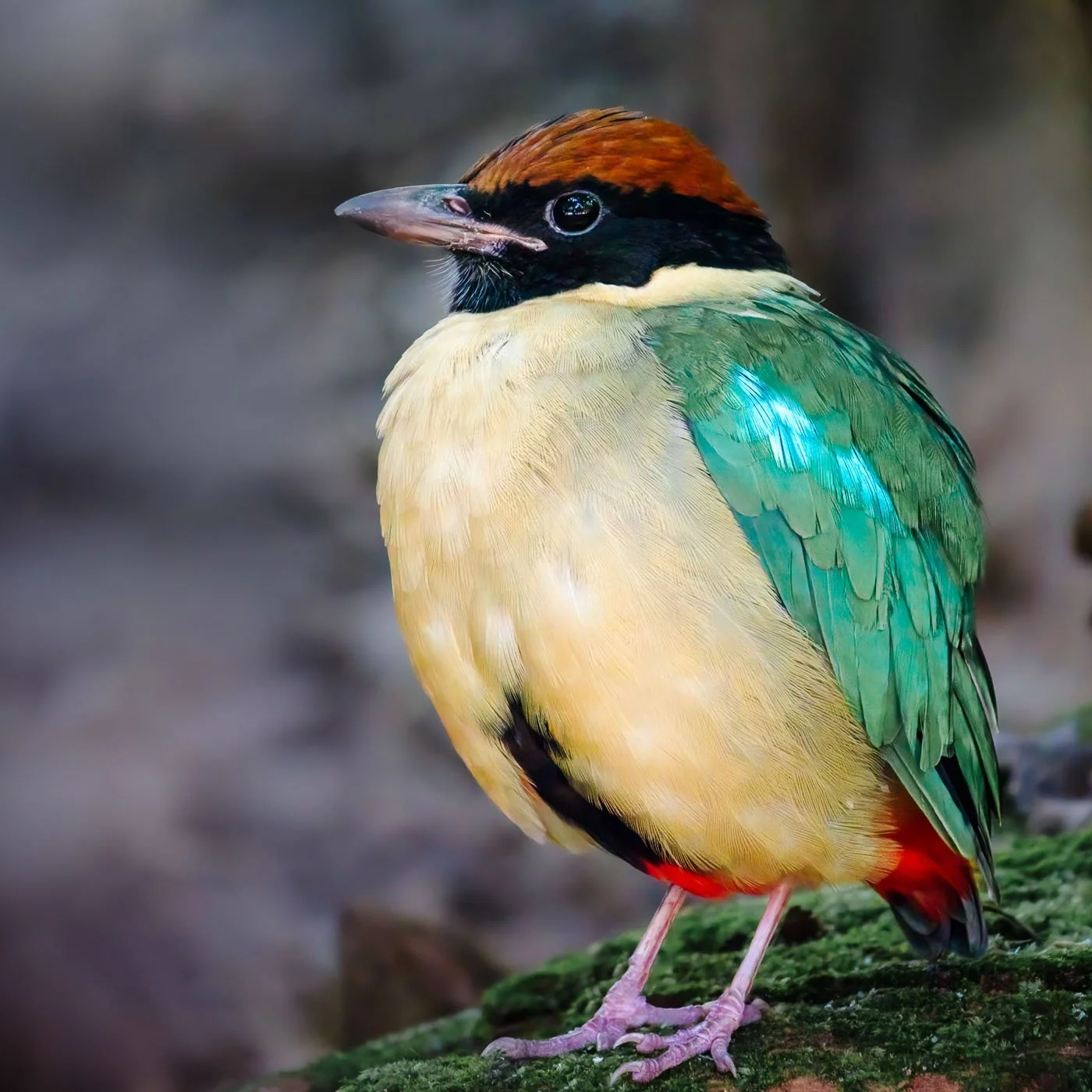
Noisy Pitta
The Noisy Pitta is a brightly coloured ground-dwelling bird of rainforests and dense woodlands in eastern Australia, New Guinea and nearby islands. It has a black head, green back, blue wing patch, yellow belly and red undertail. True to its name, the Noisy Pitta has a loud, piercing call. It feeds mainly on insects, snails and small animals, using rocks as anvils to break open snail shells. The species is shy and often heard more than seen, favouring dense undergrowth for cover.
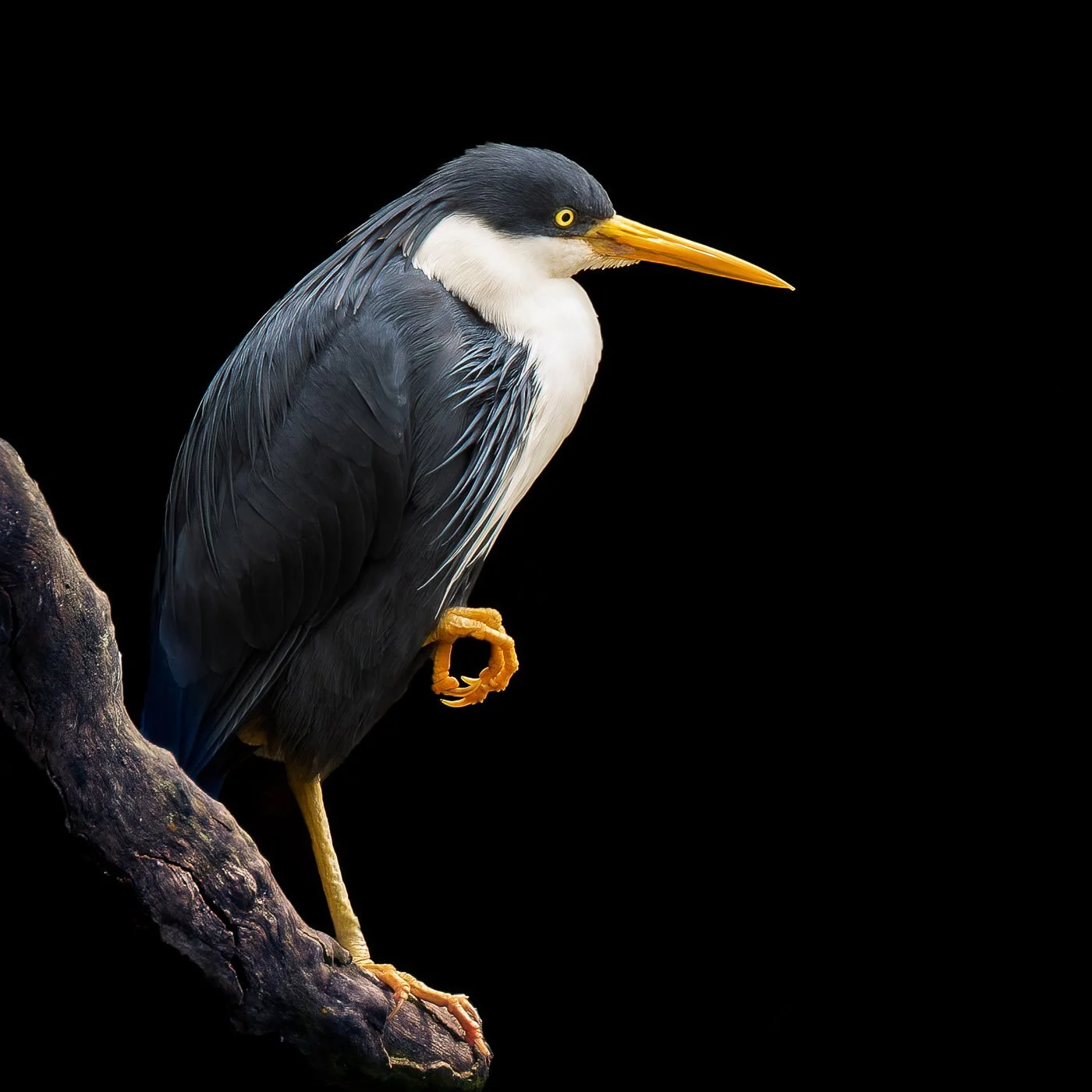
Pied Heron
The Pied Heron is a small, slender heron found in northern Australia and New Guinea. It has a dark blue-grey body, white neck and yellow legs, and measures about 50 centimetres. Pied Herons inhabit wetlands, floodplains, tidal flats and grasslands, where they feed on insects, frogs, fish and crustaceans. They are usually seen alone or in small groups and often forage by slowly walking through shallow water. During the breeding season they nest in colonies in trees over water.
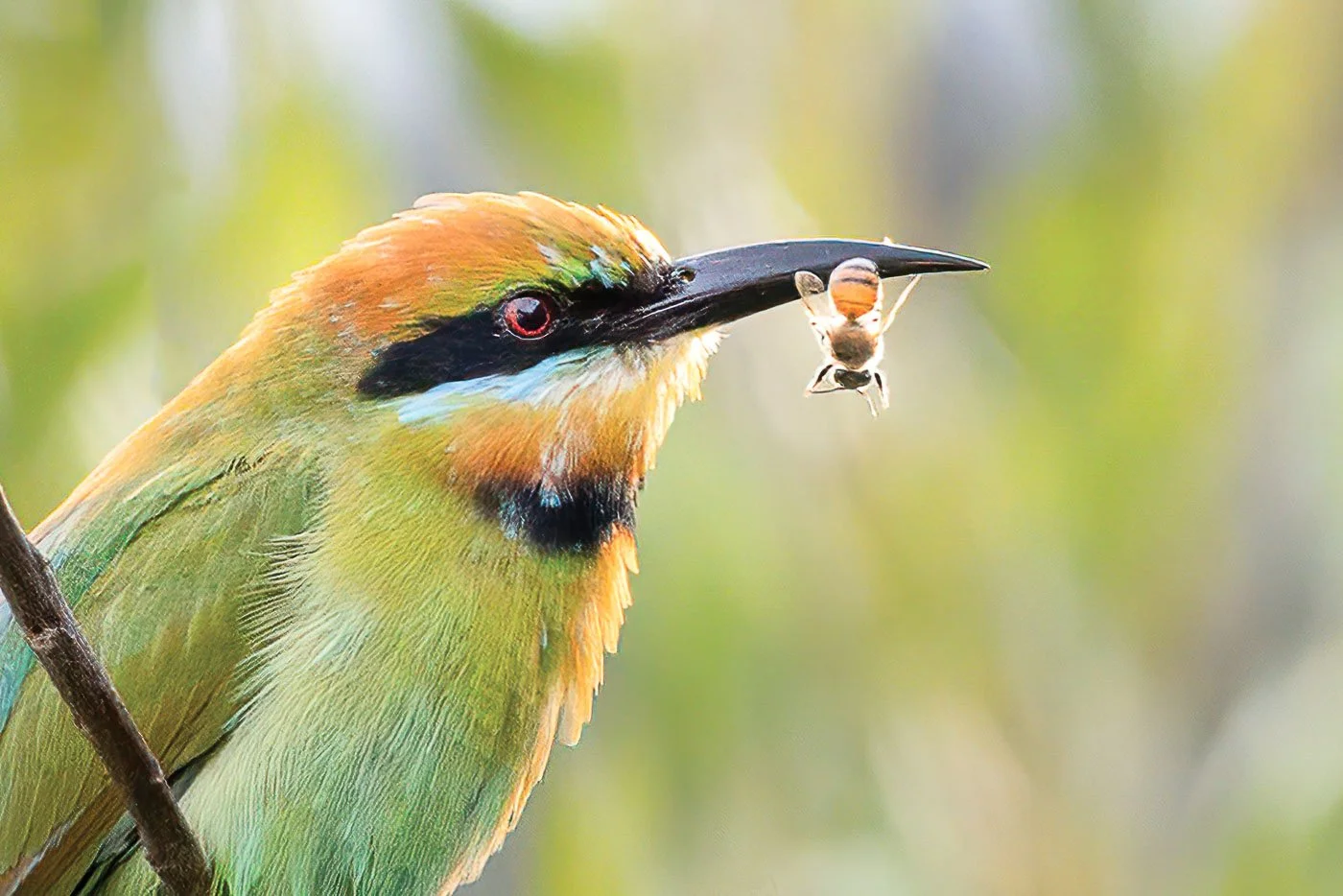
Rainbow Bee-eater
Rainbow Bee-eater is a slender, brightly coloured bird with green, gold, blue and chestnut plumage. It is found across most of Australia, especially in open woodlands, farmland and sand ridges, and is also distributed through parts of Asia and the Pacific. It feeds mainly on bees and wasps, catching them in flight and removing the sting before eating. Rainbow Bee-eaters nest in burrows dug into sandy banks or flat ground, where they lay their eggs in a chamber at the end of the tunnel.
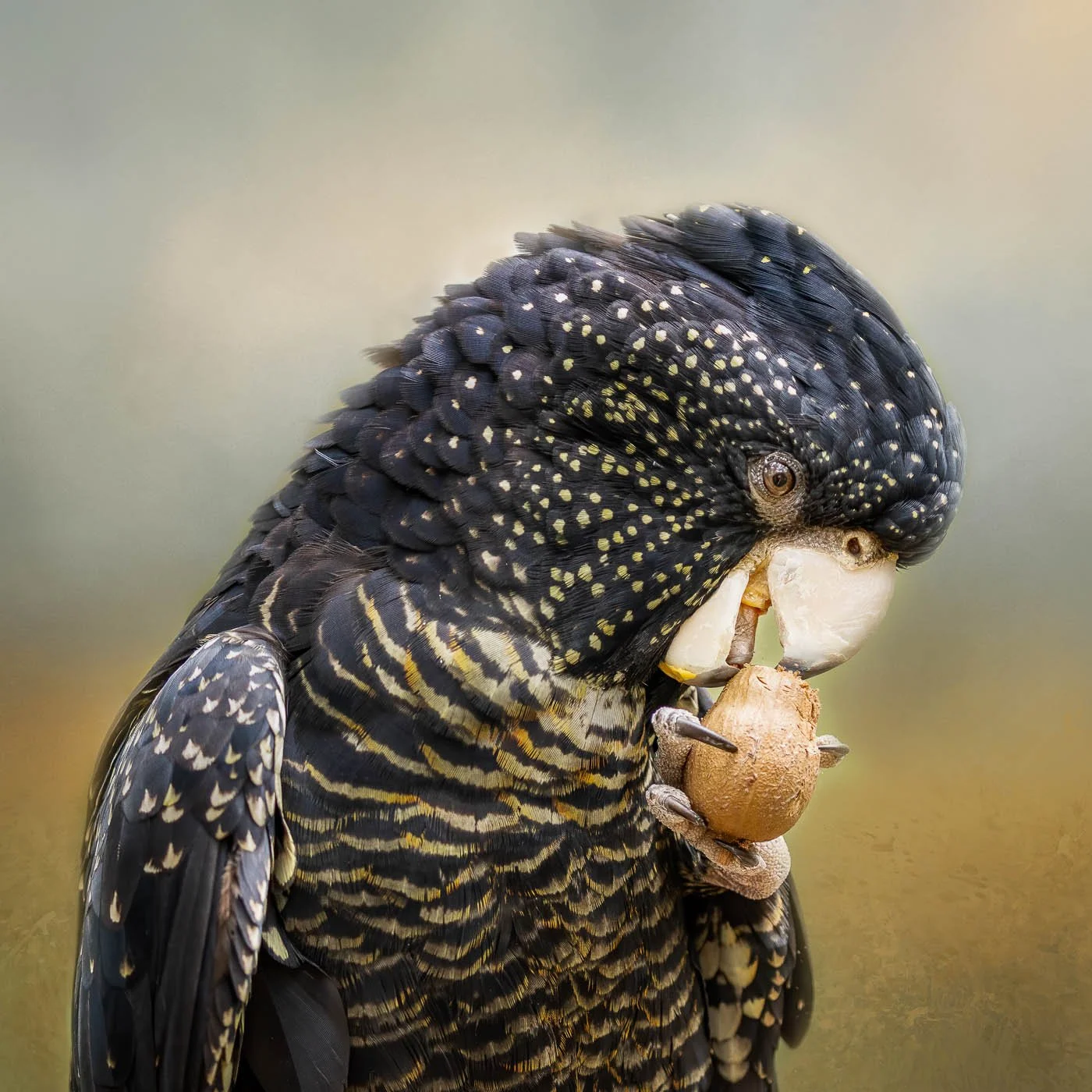
Red-tailed Black Cockatoo
The Red-tailed Black Cockatoo is a large parrot native to Australia, measuring up to 60 centimetres long. Males are mostly black with striking red panels in the tail, while females are black with yellow spots and barred tail. The species occurs in a variety of habitats across much of the continent, including forests, woodlands and savannahs. Red-tailed Black Cockatoos feed on seeds, nuts and fruit, using their powerful bills to break open tough seed capsules. They nest in tree hollows, and pairs form strong lifelong bonds.
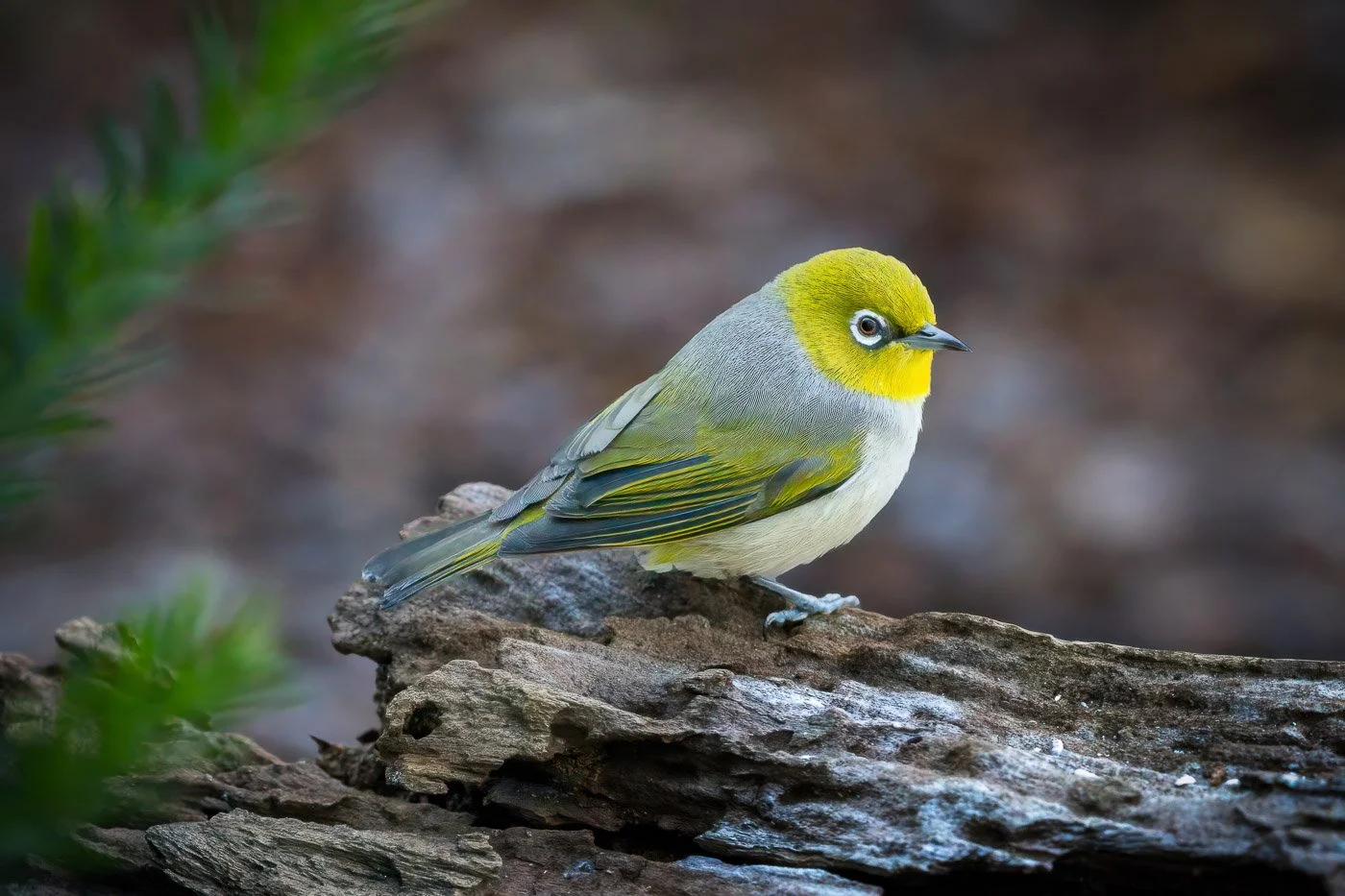
Silvereye
The Silvereye is a very small bird, about 11 to 13 centimetres long, recognised by the white ring around its eye. It occurs widely across Australia, New Zealand and many Pacific islands. They are highly adaptable and are found in forests, woodlands, orchards, gardens and coastal scrub. They feed on insects, fruit and nectar, sometimes causing damage to vineyards and orchards. Silvereyes are social birds, often travelling in flocks, and they migrate seasonally in some parts of Australia. They build small, neat cup nests of grass and spiderweb in shrubs or trees.
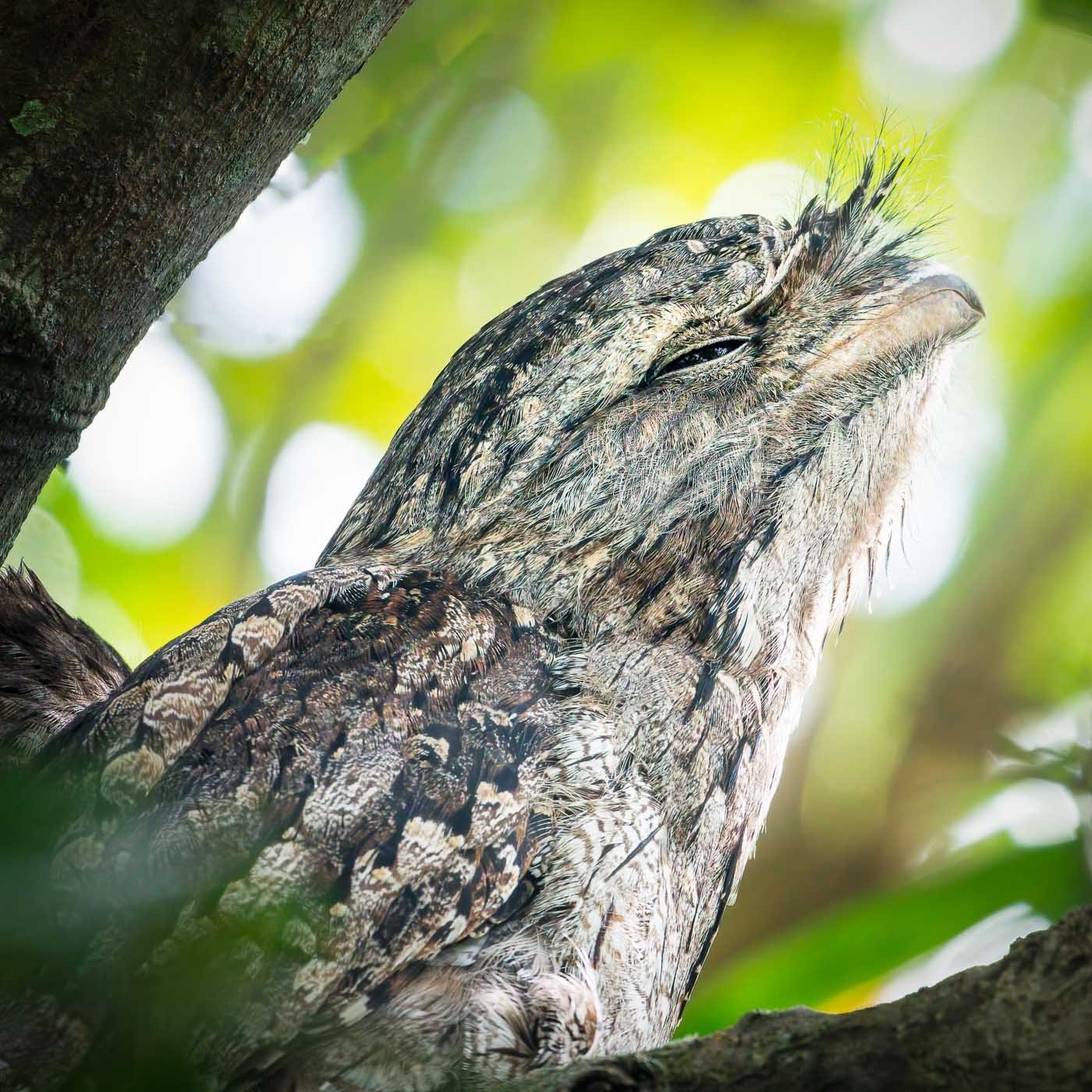
Tawny Frogmouth
The Tawny Frogmouth is a nocturnal bird found across the whole of Australia. It resembles an owl but is more closely related to nightjars. Tawny Frogmouths are well camouflaged with grey-brown mottled plumage, blending into tree bark when roosting during the day. They are about 35 to 50 centimetres long with a wide, frog-like mouth used to catch insects, spiders and small vertebrates at night. They nest on tree branches, building loose platforms of sticks, and both parents share in incubation and raising the young.